
Last updated November 14, 2026
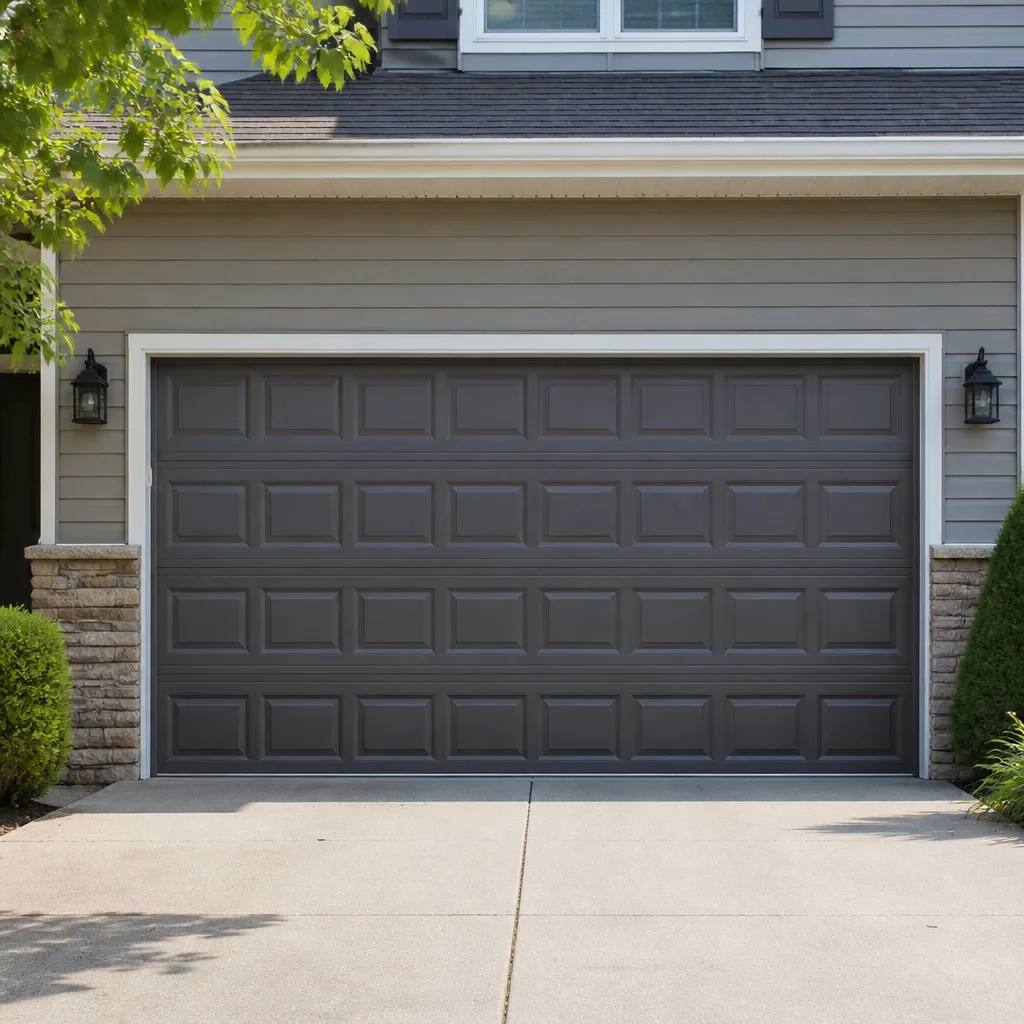 Raised-panel steel
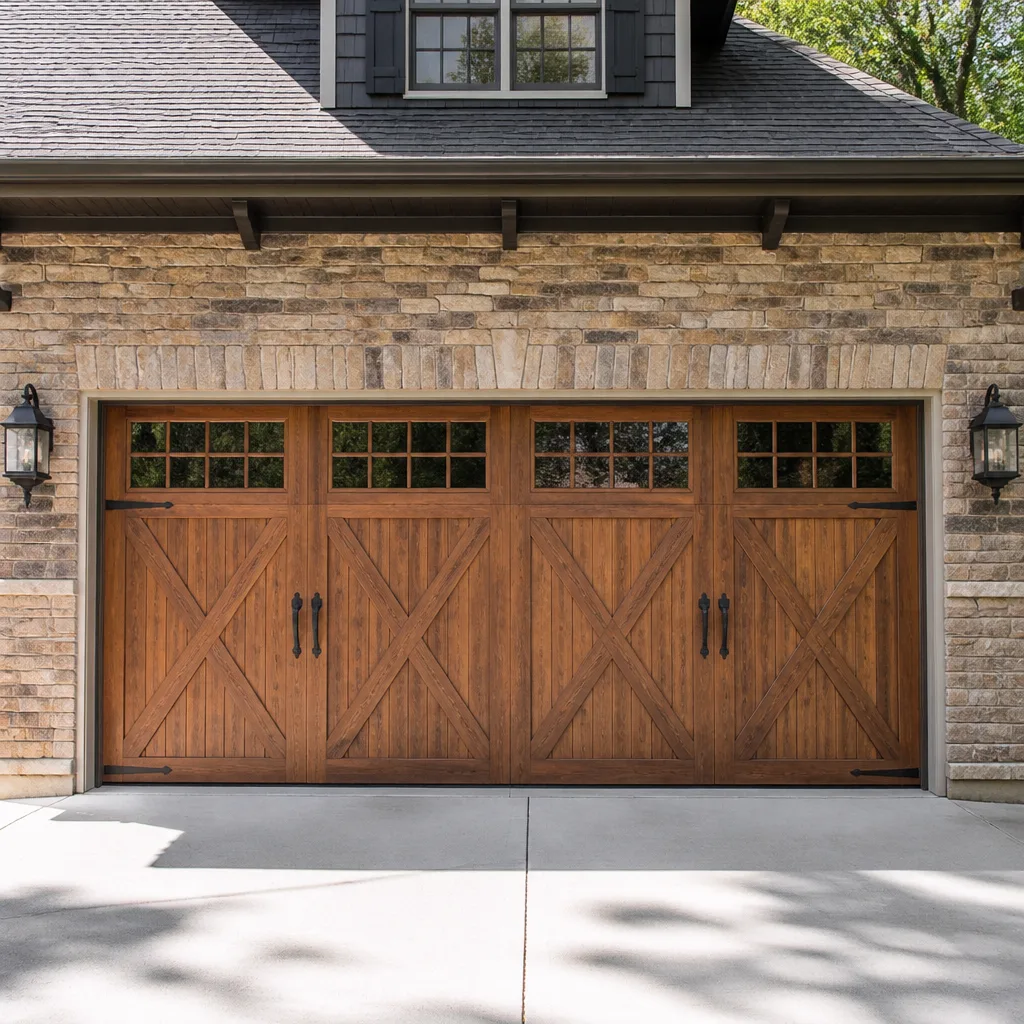 Carriage house
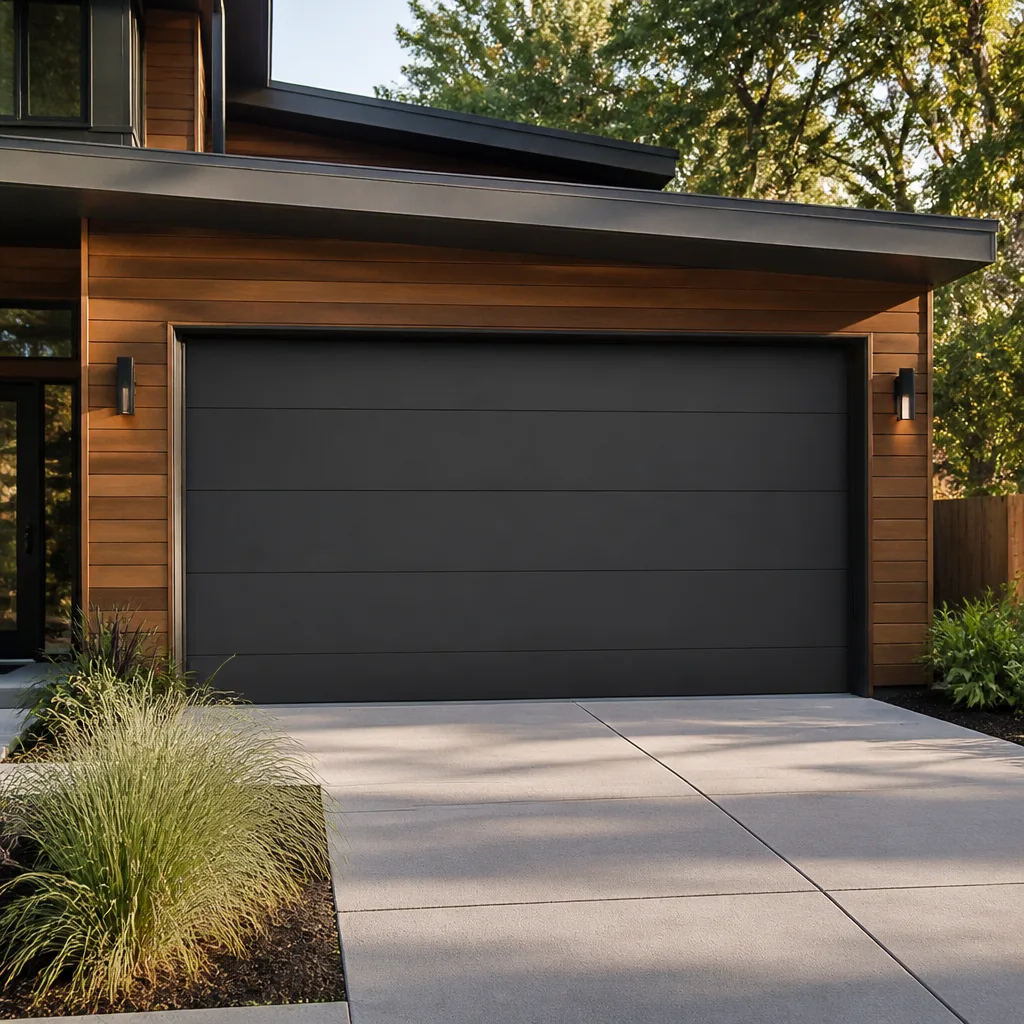 Modern flush
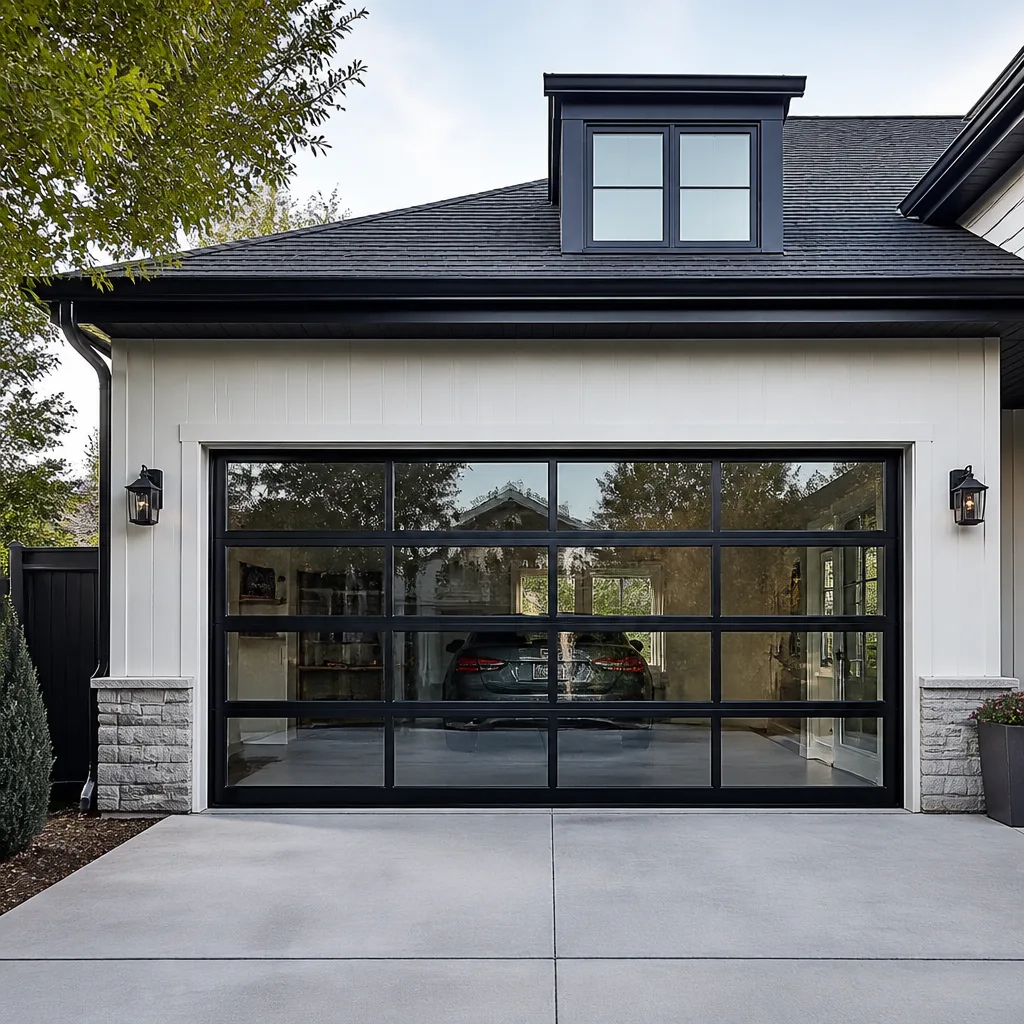 Full-view glass
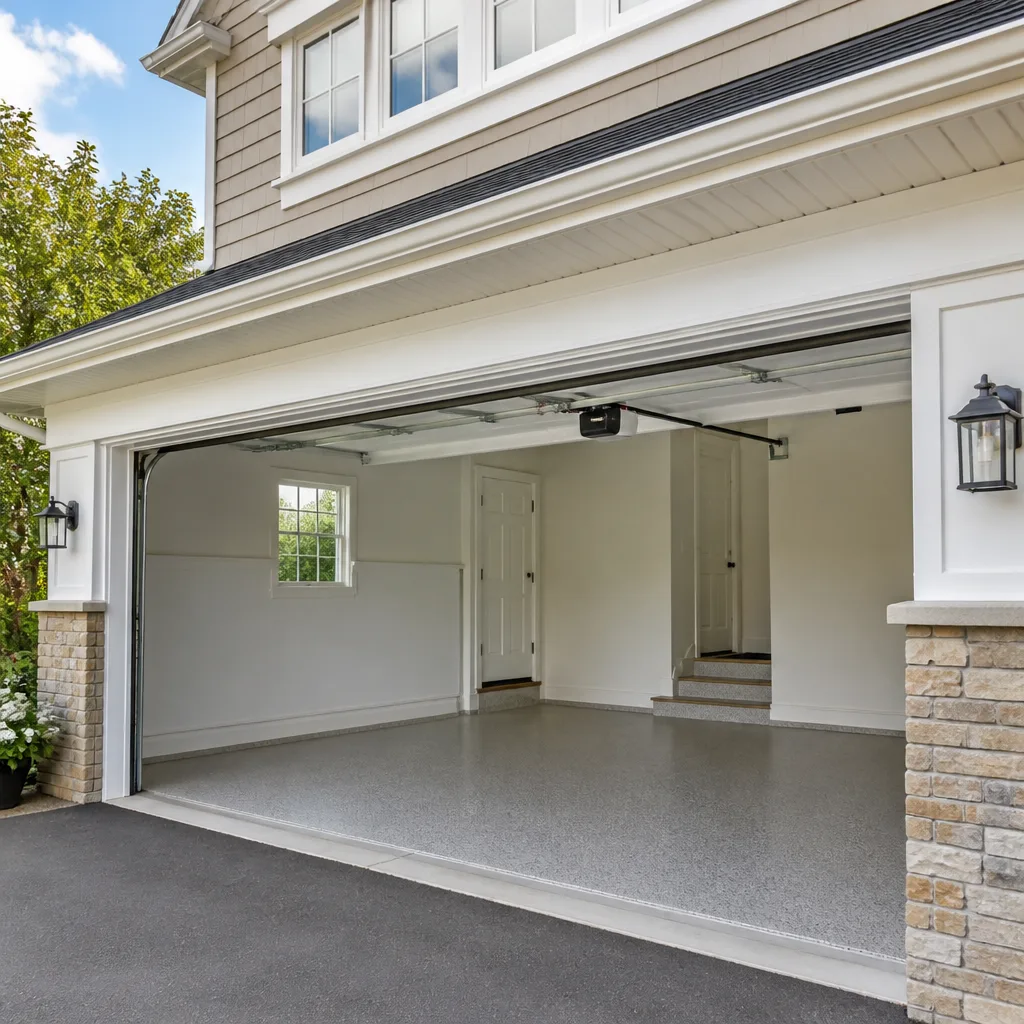 LiftMaster openers
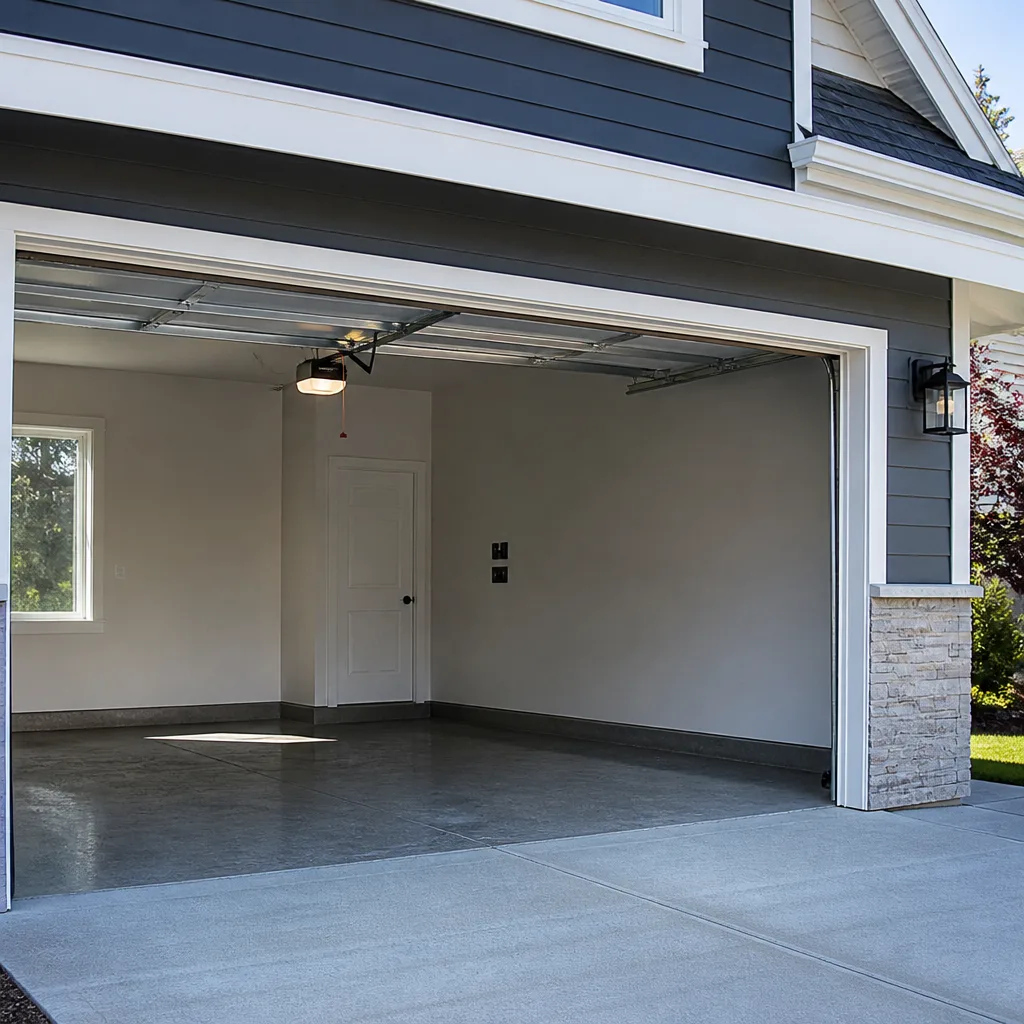 Chamberlain openers
Full 25-point door and opener safety check with every visit - springs, cables, rollers, tracks, and your LiftMaster or Chamberlain opener included
You get a price before we start. It does not change when the truck arrives.
Get your free estimateGarage Door Cost Breakdown: The Portland Homeowner’s Reference for 2026
Most garage door cost guides you’ll find online are built from national data averaged across all fifty states. They’re not wrong, exactly, but they’re not Portland either. In our experience, installed prices here tend to run higher than those national figures, for reasons that are specific to this city: older housing stock, non-standard openings, and the logistics of getting materials into the Pacific Northwest. Knowing why Portland costs differ from the national average is what turns a vague number into a baseline you can actually use when you’re staring down three quotes that don’t match.
This guide breaks down what you’re paying for on a typical Portland installation, line by line. We’ll cover door panels, hardware, openers, labor, and disposal, with 2026 market ranges for each. We’ll explain why pre-1980 homes in neighborhoods like Sellwood and Irvington often add scope to a simple job. We’ll map material choices to five-year maintenance costs in this climate, and walk through opener tiers so you can tell which upgrade is worth it and which is padding. By the end, you’ll know how to read a quote structure that makes comparison honest.
Quick Answer
A typical single-car garage door replacement in Portland in 2026 runs roughly $1,800 to $4,200 installed for a standard steel door, while a double-car door with an opener commonly lands between $3,500 and $7,500 depending on material, insulation, and whether the rough opening needs modification. Older homes with non-standard openings, low-headroom conversions, or required spring system upgrades push toward the higher end. The written estimate you receive after an on-site measure is the price that governs the job.
Styles & brands we work with
- Raised-panel steel
- Carriage house
- Modern flush
- Full-view glass
- LiftMaster openers
- Chamberlain openers
Table of Contents
- What a Portland Garage Door Installation Actually Costs, Line by Line
- Why Portland Prices Differ From National Averages
- Steel, Wood Composite, or Aluminum: Upfront Cost vs. Five-Year Cost in Portland
- Opener Cost Tiers: Chain, Belt, and Jackshaft
- Repair or Replace? How to Decide
- What a Suspiciously Low Portland Quote Is Usually Omitting
- How to Request a Quote Structure That Makes Comparison Legitimate
- Brand Matters: Why We Work on Eight Major Systems
What a Portland Garage Door Installation Actually Costs, Line by Line
A garage door installation isn’t one product with one price. It’s five or six separate cost centers bundled into a single quote, and the honest way to evaluate bids is to see each one broken out. Here’s how a typical single-car door installation in Portland breaks down for 2026.
- Door panel (single-car, standard steel): $700 – $1,600. Insulated panels land at the upper end. Clopay and Amarr both offer lines across this range that fit common Portland home styles.
- Hardware and tracks: $150 – $350. Hinges, rollers, brackets, and vertical/horizontal track. This is where cheap quotes cut corners with lighter-gauge components that wear faster.
- Spring system: $180 – $450 depending on door weight and whether torsion or extension springs are specified. Current load ratings sometimes call for an upgrade over what the old door used.
- Opener (if included): $350 – $900 installed, depending on tier. See the opener section below for the breakdown.
- Labor: $400 – $900 for a standard single-car install. Portland labor rates sit above the national median, and that’s reflected here.
- Disposal and haul-away: $75 – $200. Old doors and hardware have to go somewhere, and that’s a real cost.
Add those up for a mid-range single-car job and you land around $1,800 to $4,200 installed. A double-car door roughly doubles the panel cost and adds labor, which is why the combined figure commonly reaches $3,500 to $7,500 with an opener. These are estimates, not quotes. The number that matters is the one on your written estimate after an on-site measure.
Where the Numbers Move
Three things push a Portland job toward the top of these ranges. First, a rough opening that isn’t square or standard size. Second, low headroom in a converted or older garage, which limits which doors and openers will fit. Third, an opener upgrade from a legacy chain drive to something smart-home compatible. None of these are unusual here, which is exactly the point of the next section.
Why Portland Prices Differ From National Averages
If you’ve priced a door using a national calculator and then gotten a local quote that came in noticeably higher, you’re not being taken advantage of. Three Portland-specific factors reliably add scope to jobs that would be simple elsewhere.
Non-Standard Rough Openings in Pre-1980 Homes
Portland has a deep inventory of homes built before 1980, and garages from that era were not framed to today’s standard opening dimensions. A door that’s nominally “standard” may not fit without reworking the framing, adding a header, or ordering a custom-width panel. In neighborhoods with a lot of older housing, this comes up often. When it does, the added cost is for carpentry and framing time, not the door itself.
Low-Headroom Conversions
Plenty of Portland garages were built low, or were converted from other uses, leaving less vertical clearance than a modern door needs. Low-headroom situations call for specific track configurations and sometimes a low-clearance opener or a jackshaft design. It’s solvable, but it’s extra parts and extra time.
Spring System Upgrades
Doors are heavier than they used to be, especially insulated ones. When you replace a light, uninsulated door with an insulated model, the existing spring system may not be rated for the new weight. That means new springs sized to the door. It’s a safety matter, not an upsell, and it belongs in the quote from the start.
None of this means every Portland job carries these costs. A newer home with a standard opening goes in at a standard price. But if you’re in an older house and your quote seems higher than a national average, check whether these three factors are baked into it. A good garage door repair conversation starts by finding out what your opening actually is before anyone quotes a number.
Steel, Wood Composite, or Aluminum: Upfront Cost vs. Five-Year Cost in Portland
Material choice is the single biggest lever on both what you pay up front and what you pay to keep the door working over the next five years. In Portland’s wet, mild climate, the differences are real but they aren’t the ones people usually expect. It’s not salt air or coastal weather doing the damage here. It’s rain, humidity, and the freeze-thaw cycle that shows up in the colder months, affecting wood and lower-grade steel far more than a well-finished door.
- Steel (24-gauge to 26-gauge): The most common choice. Upfront cost sits in the middle. Insulated steel panels handle Portland’s damp months well as long as the finish holds. Five-year maintenance is minimal: occasional washing, a look at the bottom seal, and touching up any chips before they spread. Lower-gauge steel dents more easily, which shows up in a garage used for more than parking.
- Wood composite: Warmer look, higher upfront cost. In this climate, wood and wood-composite doors need periodic refinishing to prevent moisture from getting into the material. Over five years, that recurring effort is the real cost, not the purchase price. Worth it if you want the appearance and will keep up with it.
- Aluminum: Light, rust-resistant, and often used for full-view or modern designs. Upfront cost runs higher than basic steel. It dents more easily than steel, so it suits homeowners who care more about look than impact resistance. Minimal maintenance over five years.
The practical takeaway: if you want the lowest total cost over five years in Portland, a well-insulated steel door with a good finish wins. Wood composite wins on appearance if you’ll maintain it. Aluminum wins on a specific modern aesthetic. We install doors from Clopay, Amarr, Wayne Dalton, and Raynor, which means we can talk through real material options across budgets rather than steering you toward whatever a single manufacturer offers. For a broader look at how doors and systems fit together, see our main Shoreline Garage Door Service page.
Opener Cost Tiers: Chain, Belt, and Jackshaft
Openers are where quotes diverge most, and where upselling is easiest to spot once you know the tiers. Here’s what each costs and who it actually makes sense for.
Chain Drive: $350 – $500 Installed
Chain drives are the workhorse. They’re reliable, they handle heavier doors, and they’re the least expensive tier. The tradeoff is noise. In a detached garage or an older home where the garage isn’t under a bedroom, that noise rarely matters. If you’re replacing a legacy chain drive with another one, this is the straight swap. LiftMaster and Genie both make solid chain units that we service and install regularly.
Belt Drive: $500 – $700 Installed
Belt drives run quieter than chain and are the common upgrade for attached garages, especially in homes where a bedroom or living space sits above or beside the garage. In a lot of Portland’s closer-in neighborhoods, houses are tight on space, and a quiet belt drive pays off in daily comfort. This is a genuine upgrade for most homeowners, not padding.
Jackshaft: $700 – $900 Installed
Jackshaft openers mount on the wall beside the door and drive it through a torsion shaft rather than a rail overhead. They’re the answer for low-headroom garages where a ceiling-mounted unit won’t fit, and they suit high-lift and vertical-lift door setups. This is where you need to be honest about whether it’s necessary. If you don’t have a headroom problem and don’t have a specific door configuration that requires it, a jackshaft is usually more than you need.
Which tier makes sense for Portland conditions? For most attached garages, belt drive is the sweet spot and worth the modest step up from chain. Jackshaft is a solution to a specific geometry problem, not a general upgrade. If your old opener still works but is acting up, garage door opener repair may be all you need, and we’ll tell you so rather than selling you a new unit. We work on LiftMaster, Chamberlain, Genie, and Craftsman systems, from legacy models to current smart-home-compatible platforms, so both older homes and connected households get the same diagnostic-first approach.
Repair or Replace? How to Decide
Not every problem needs a new door. In our experience, a meaningful share of the doors we’re called out to assess can be repaired rather than replaced, and the cost difference is large. Here’s a simple sequence for thinking it through.
- Identify what’s actually failing. Is it the door, the opener, or the balance of the system? A door that won’t close might have a failing opener, a broken spring, or an obstruction in the track. Each has a different cost.
- Check the door structure. Dents and dings are cosmetic. Cracks in the panel, sagging sections, or a door that’s visibly bowed are structural and usually point toward replacement.
- Look at the springs and hardware. Worn springs and hardware are replaceable on their own. If the door panels are sound, this is almost always the cheaper path.
- Consider the opener’s age and support status. An opener that’s no longer serviceable or has no parts support is a candidate for replacement even if it limps along.
- Weigh repair cost against replace cost. If the repair is approaching half the cost of a new installation, and the door is already older, replacement often makes more sense over the next decade.
One safety note worth stating plainly: springs and cables are under extreme tension and can cause serious injury if handled by someone who isn’t trained. We never recommend DIY work on the spring system or on the opener’s electrical connections. A technician with the right tools can diagnose and fix these safely. The rest of the door, such as track alignment and hardware inspection, is where the repair decision usually gets made.
What a Suspiciously Low Portland Quote Is Usually Omitting
When one quote comes in far below the others, it’s rarely because that company found a secret discount. It’s usually because something got left out. Here’s what to look for.
- Disposal and haul-away. The lowest quotes often leave the old door and hardware on your property for you to deal with.
- Proper spring sizing. If the quote doesn’t mention springs sized to the new door’s weight, it may be reusing old springs that aren’t rated for it.
- Hardware grade. Cheap hinges, rollers, and thinner-gauge track fail faster. The savings on the quote get paid back in a couple of years.
- Framing or opening work. If your rough opening isn’t standard and the quote doesn’t mention framing, they may be planning to force a fit or add a surprise line item later.
- Opener installation. Some quotes list an opener price but not the labor to install, wire, and sync it.
- Permits. Most cities require a permit for structural changes to a garage opening. Ask your city’s building department what applies to your job, and make sure the quote reflects it if it does.
- Warranty terms. A low quote sometimes carries little or no workmanship coverage. Ask what’s covered and for how long before you compare on price alone.
The pattern is consistent: the cheapest quote is often cheapest because it’s a smaller job than the others, not a better deal on the same job.
How to Request a Quote Structure That Makes Comparison Legitimate
Comparing garage door quotes is only meaningful if they’re broken down the same way. Here’s how to ask for that.
- Ask for line items, not a lump sum. Request the door panel, hardware, springs, opener, labor, and disposal broken out separately. A company confident in its pricing will provide this.
- Ask which brand and model are specified. “A steel door” isn’t comparable to another quote’s “a steel door.” Get the manufacturer and model line.
- Ask whether the rough opening was measured. If the quote was given over the phone without an on-site measure, treat it as a placeholder. Insist on an in-person measure before accepting.
- Ask what’s excluded. Framing repairs, electrical work for a new opener, permit fees, and disposal are the usual exclusions. Make them explicit.
- Ask about warranty on both the product and the installation. These are separate things, and both matter.
- Confirm the price is locked once you sign. The written estimate should set the price for the job. Ask what could change it and why.
Do this and you’ll be comparing apples to apples. It also sends a clear signal to each company that you know what you’re looking at, which tends to bring out the most accurate quote.
Brand Matters: Why We Work on Eight Major Systems
Garage doors and openers aren’t universal. Each manufacturer has its own track profiles, spring configurations, and opener electronics. A crew that works on one brand all day is fast on that brand and guessing on the rest. We’re trained and equipped to service eight of the most widely installed residential brands: LiftMaster, Chamberlain, Genie, Clopay, Amarr, Wayne Dalton, Craftsman, and Raynor. That matters when your home already has a Wayne Dalton door and a Genie opener, or when you’re deciding between a Clopay and an Amarr panel for a new install.
The practical benefit is diagnosis. Knowing a specific brand’s failure patterns, rather than treating every door as generic, is what lets us repair rather than replace when repair is the right call. It also means one call covers the whole arc: repair, opener work, and new installation. No handing you off between contractors. If you’re in the middle of a project and want to talk through what your brand needs, a call to Portland‘s Shoreline team is the place to start.
That’s also why we work the way we do. Repair first, diagnose before replacing, and quote in writing before any work begins. The written estimate is the price. That’s the whole promise, and it’s what we’ve held to since 2016.
Common Mistakes to Avoid
- Accepting a phone quote without an on-site measure. Garage door pricing depends on the rough opening, headroom, and existing track, none of which can be assessed over the phone. Get the measure first.
- Comparing lump sums instead of line items. Two quotes that look $800 apart may differ only in what’s bundled. Break them down before you decide.
- Ignoring the rough opening on an older home. If you’re in a pre-1980 house and the quote doesn’t mention the opening, ask whether it was checked. Portland’s older neighborhoods routinely surprise people here.
- Assuming a quieter opener is always the upgrade you need. Belt drive is worth it in attached garages. Jackshaft is a solution to a specific headroom problem, not a default upgrade.
- Choosing the lowest quote without asking what’s excluded. Disposal, framing, electrical, and permits are the usual exclusions. Get them in writing.
- Skipping spring sizing when changing door weight. An insulated door is heavier. Reusing the old springs can leave the door unbalanced or unsafe. Springs are matched to the door.
- Trying to adjust or replace springs yourself. Springs and cables are under extreme tension. This is the one part of the system where a trained technician is essential.
- Forgetting to ask about workmanship warranty. Product warranty and workmanship warranty are different things. Ask about both before you sign.
See the difference
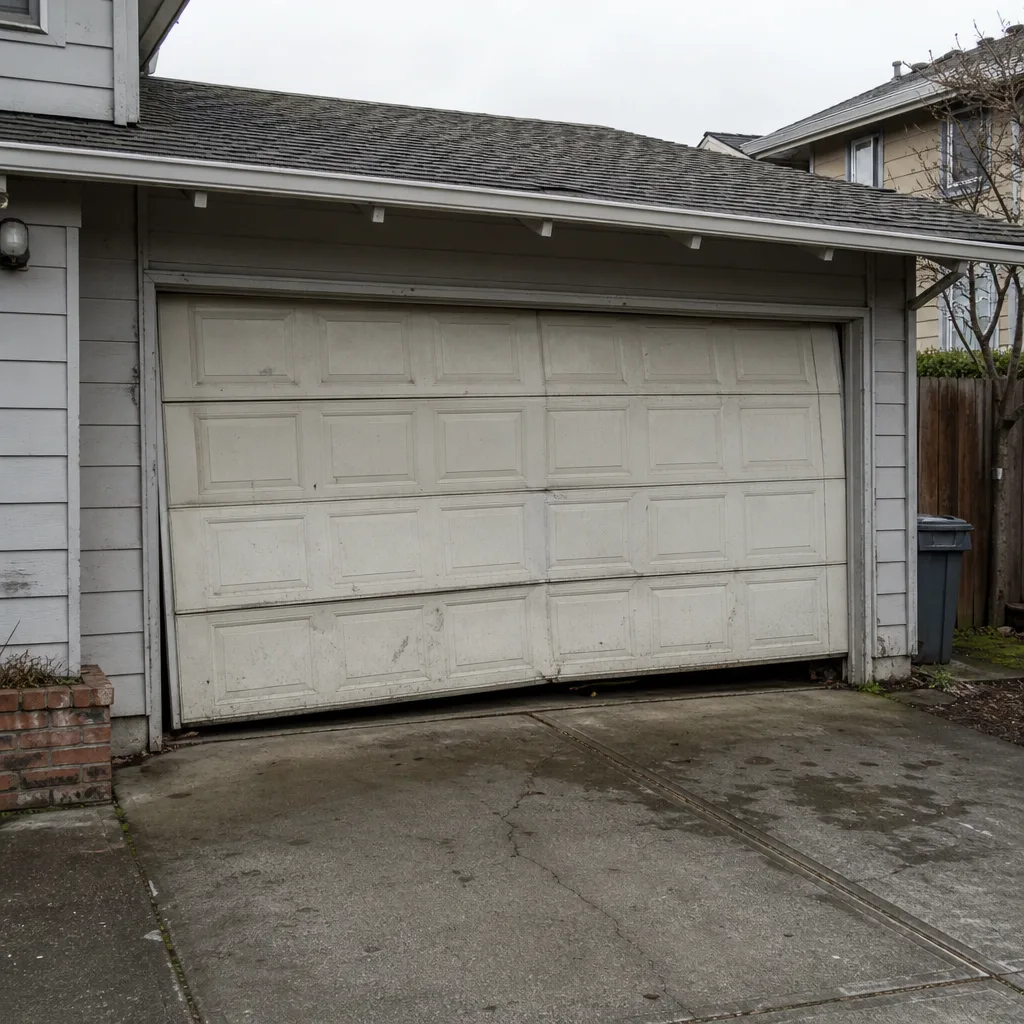 Before
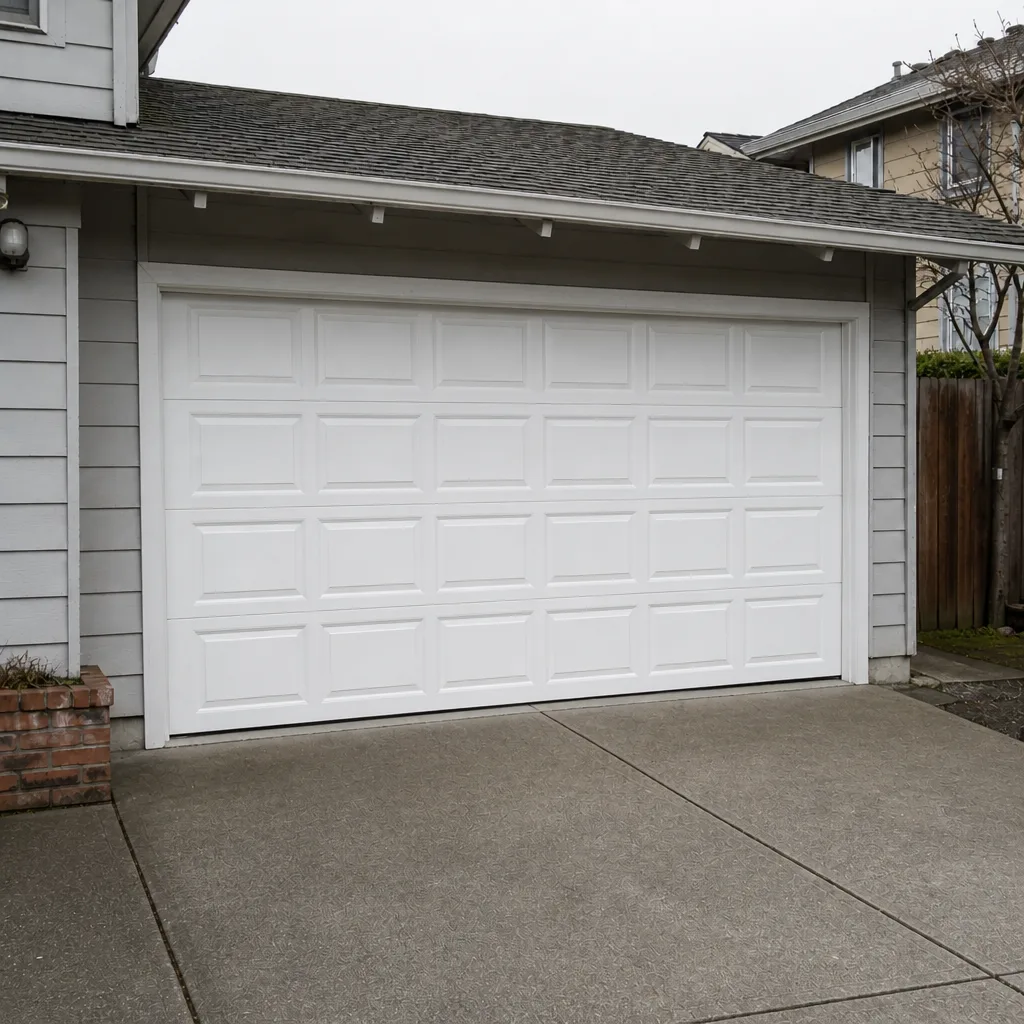 After
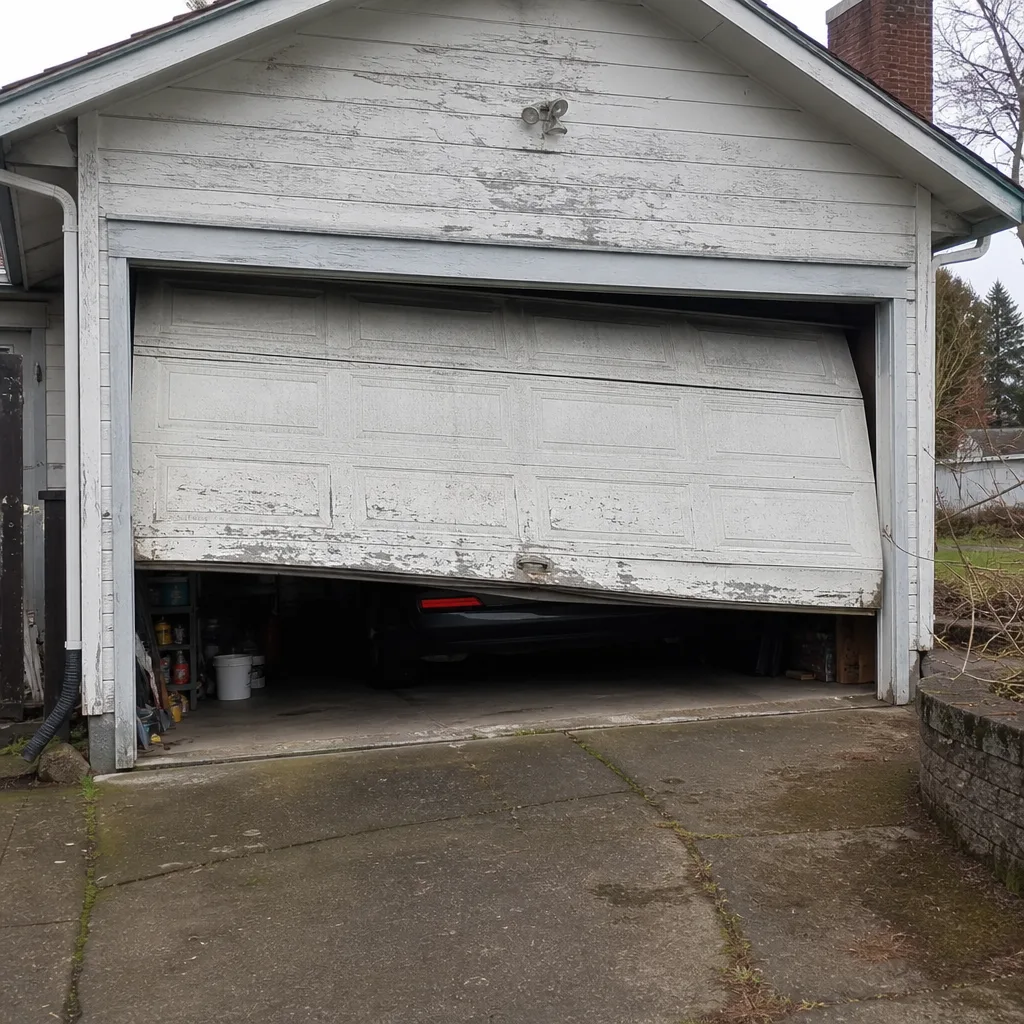 Before
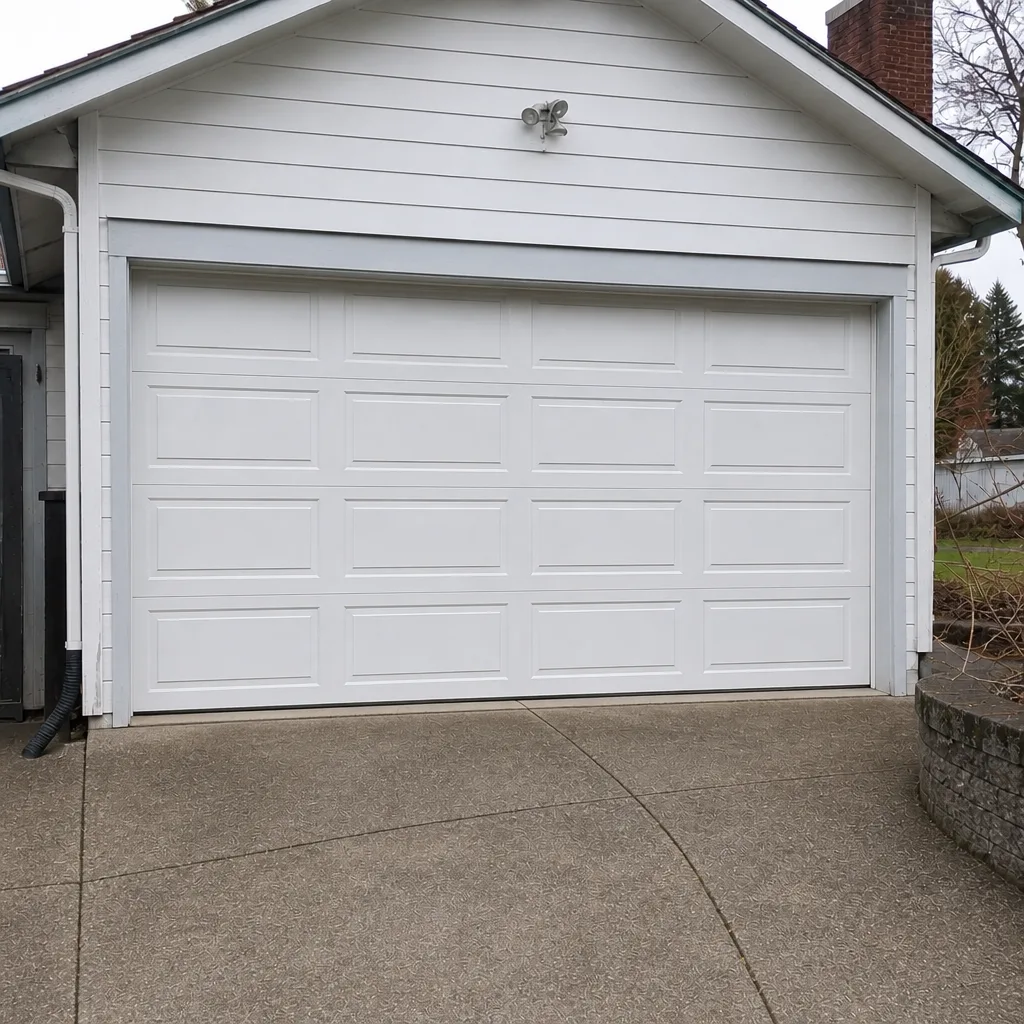 After
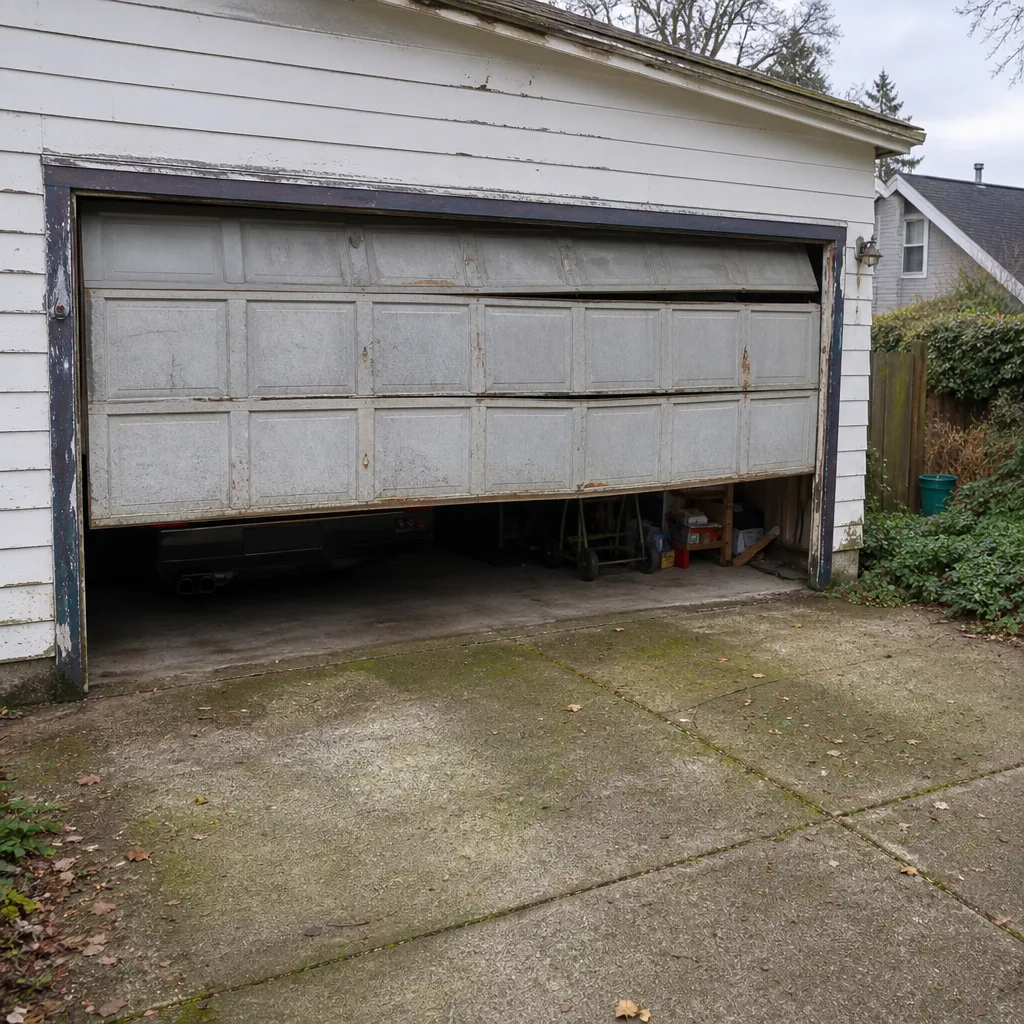 Before
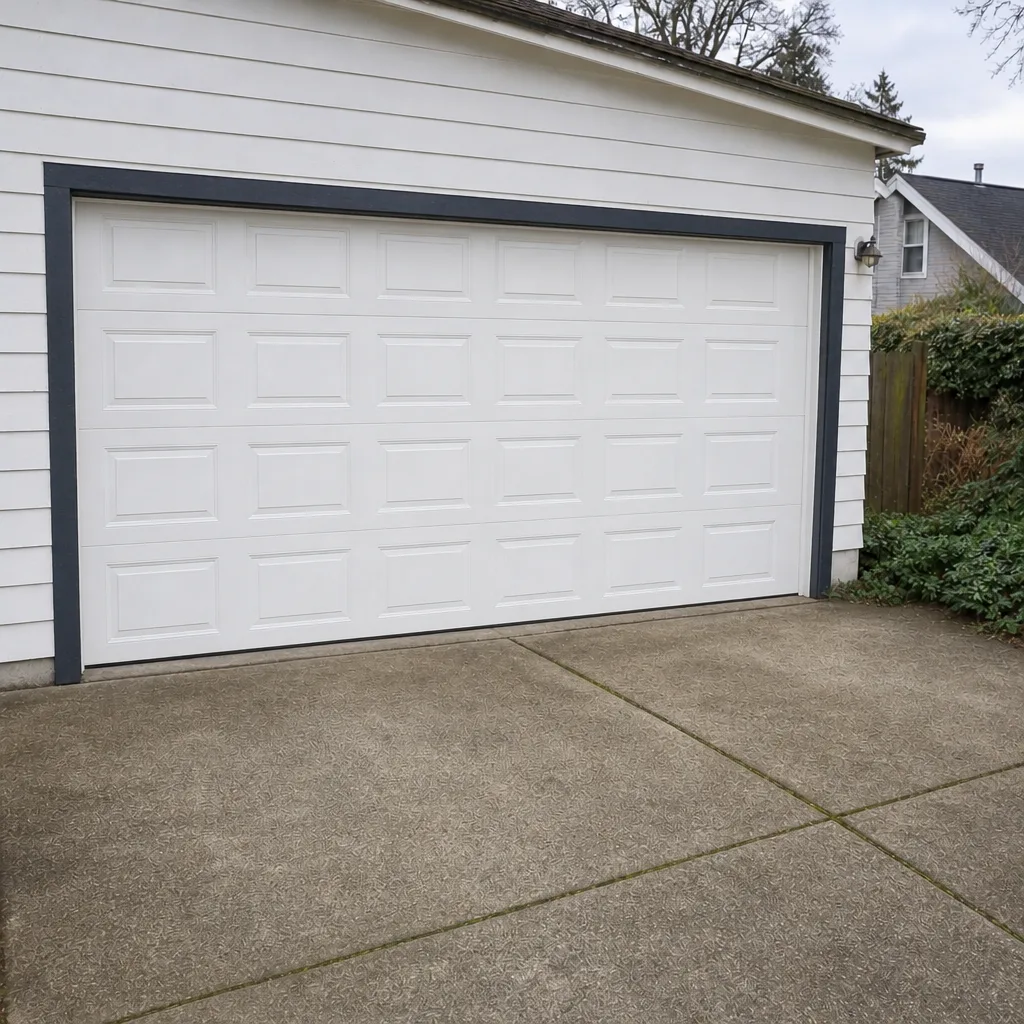 After
When to Call a Professional
Some garage door issues are genuinely safe for a homeowner to handle: a remote that needs re-pairing, a track that’s slightly out of line, a bottom seal that needs replacing, an obstruction sensor that’s been bumped. But the moment the problem involves springs, cables, or the electrics inside the opener, it’s a job for a trained technician. Springs and cables are under extreme tension and can cause serious injury. A door that won’t stay open, a door that slams, a door that’s visibly crooked, or an opener that grinds or hums without moving the door are all signals to stop and call. If you’re in doubt, err on the side of a professional assessment. Shoreline Garage Door Service offers free estimates in Portland. Call (866) 942-7741. We answer 24/7, with fast dispatch from 7am to 7pm, Sunday through Friday.
Frequently Asked Questions
A single-car garage door replacement in Portland typically runs $1,800 to $4,200 installed for a standard steel door, and a double-car installation with an opener commonly lands between $3,500 and $7,500 depending on material, insulation, and whether the rough opening needs work. Older homes with non-standard openings or low headroom push toward the higher end. Call (866) 942-7741 for a free on-site measure and a written estimate.
Yes, repair jobs are often handled the same day, depending on the diagnosis and parts needed. A stuck door is a security and safety issue, so we treat it as a priority. Call (866) 942-7741. We answer 24/7, with fast dispatch from 7am to 7pm, Sunday through Friday. A call outside dispatch hours is booked into the next opening.
No. The written estimate sets the price for the job. We quote before any work begins, and the number on the estimate is what you pay. If we discover something unforeseeable, such as a hidden framing problem, we stop and talk with you before doing anything that would change the price. Estimates are free.
We work on eight major residential brands: LiftMaster, Chamberlain, Genie, Clopay, Amarr, Wayne Dalton, Craftsman, and Raynor. Common parts for these systems are stocked or quickly sourced, though a specific component may need ordering. Call (866) 942-7741 to confirm your exact model.
Portland pricing is shaped by older housing stock with non-standard openings, low-headroom conversions, material shipping timelines into the Pacific Northwest, and labor rates above the national median. A quote that accounts for these is not automatically overpriced; it may simply reflect the actual scope of the job. Break quotes into line items to compare fairly.
Repair is usually the right call when the door panels are structurally sound and only springs, hardware, or the opener are failing. Replacement makes more sense when the door is cracked, sagging, or when repair cost approaches half the cost of a new install. We’ll diagnose first and tell you which path is cheaper. Call (866) 942-7741 for a free assessment.
The Bottom Line
Portland garage door pricing is higher than national averages for real reasons: older homes with non-standard openings, low-headroom garages, and the cost of getting materials and quality labor into this market. Knowing what you’re paying for lets you evaluate quotes on their merits instead of on the final number alone. Break every quote into line items. Ask what’s excluded. Insist on an on-site measure. Match your opener tier to your actual conditions, not to an upsell. And treat spring and cable work as a professional job without exception. Whether you’re repairing, upgrading an opener, or installing something new, the goal is the same: your door back up and running, balanced and tested, with a price you agreed to before anyone started.
Written by the team at Shoreline Garage Door Service, serving Portland since 2016.
Ready for a straight answer on your garage door? Call (866) 942-7741 for a free estimate. We answer 24/7, with fast dispatch from 7am to 7pm, Sunday through Friday.