
Last updated November 14, 2026
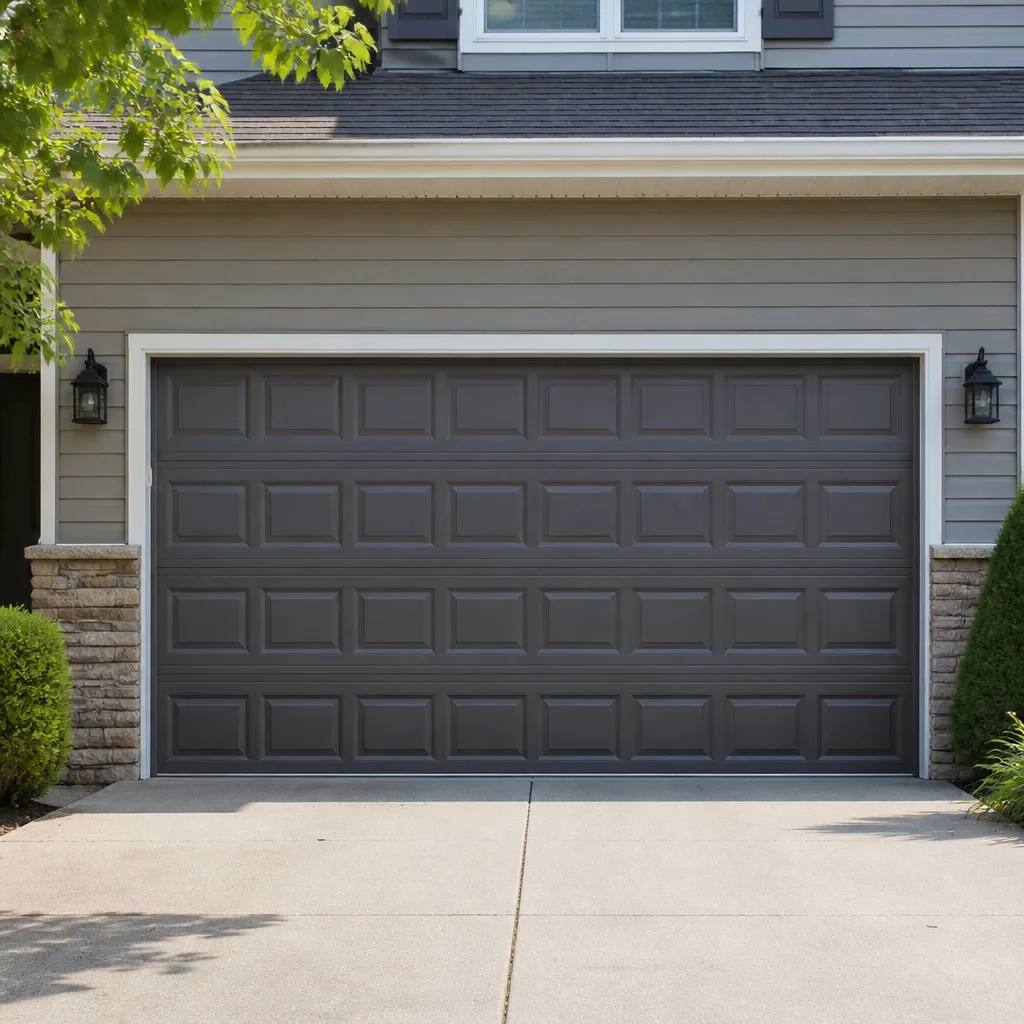 Raised-panel steel
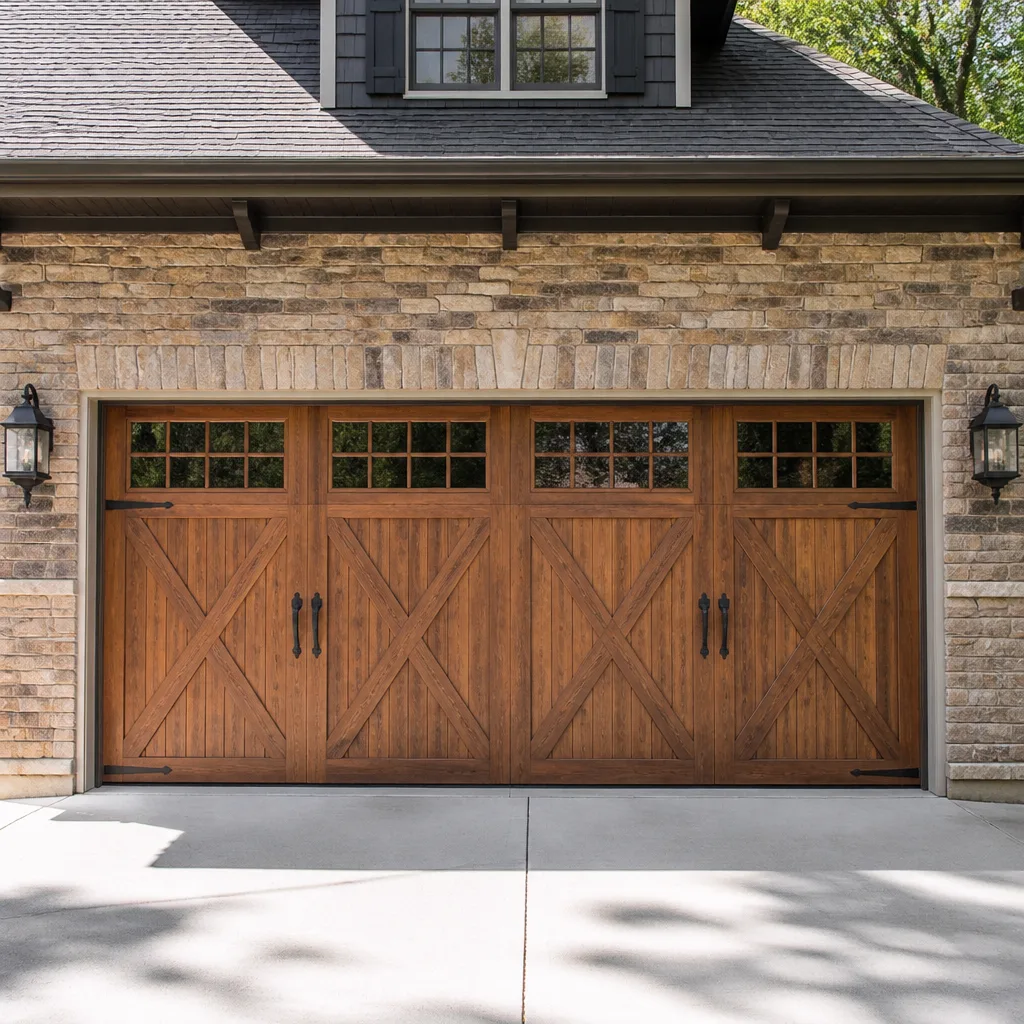 Carriage house
 Modern flush
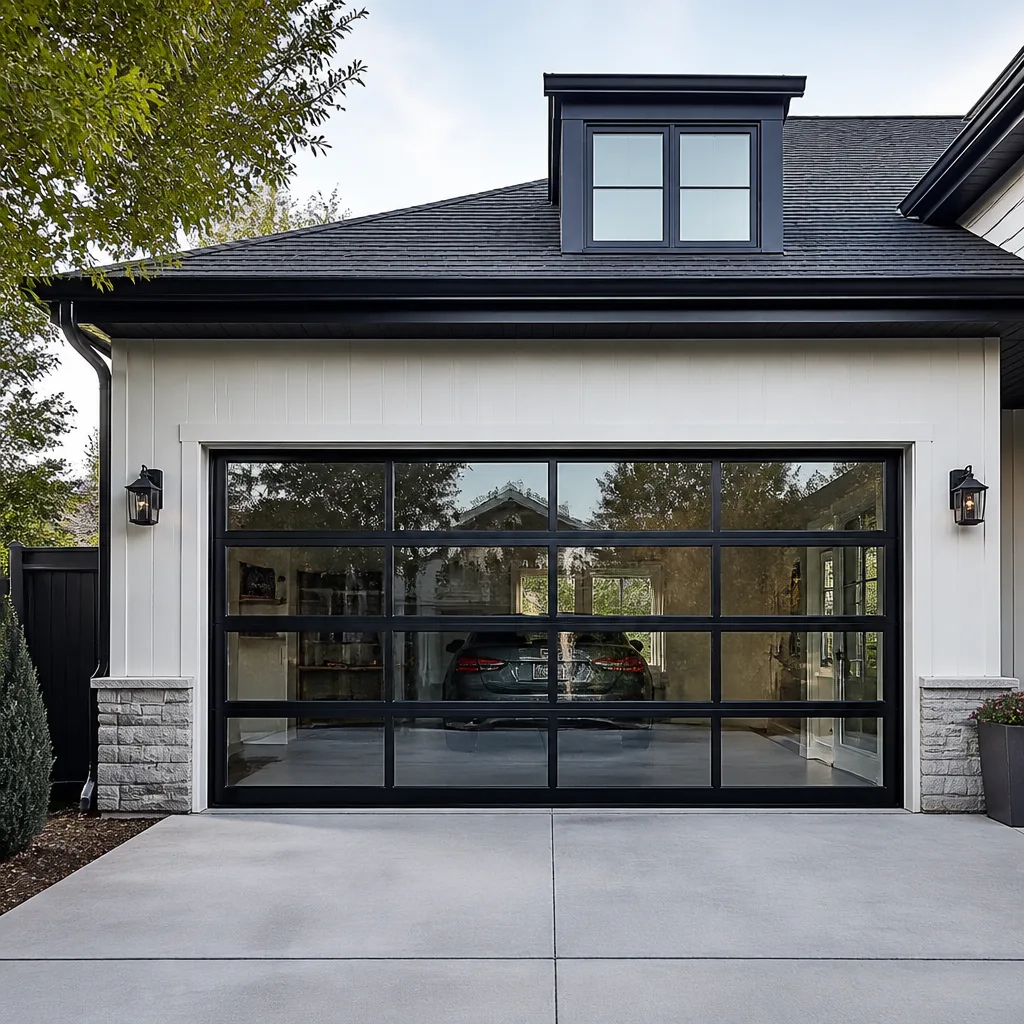 Full-view glass
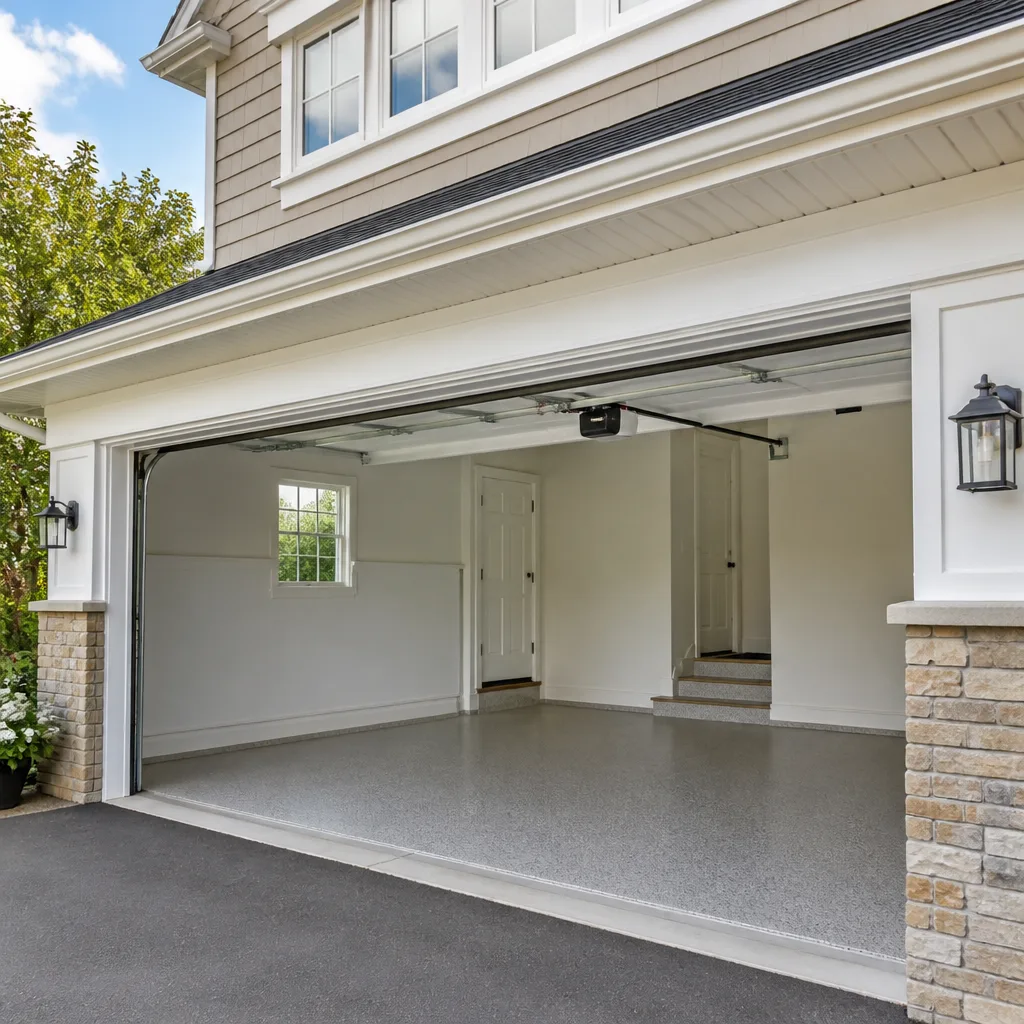 LiftMaster openers
 Chamberlain openers
Full 25-point door and opener safety check with every visit - springs, cables, rollers, tracks, and your LiftMaster or Chamberlain opener included
You get a price before we start. It does not change when the truck arrives.
Get your free estimateDIY vs Professional Garage Door: The Portland Homeowner’s Decision Guide
Here’s the part most garage door advice gets wrong: the question isn’t whether you’re handy enough. Plenty of Portland homeowners can handle a bottom seal or reprogram an opener without breaking a sweat. The real question is which specific jobs carry genuine injury or liability risk, and which ones you can safely knock out on a Sunday afternoon. A torsion spring under load stores enough energy to do serious damage if it lets go, and that’s physics, not a scare tactic. But painting your door, swapping a weather seal, or syncing a remote are tasks any careful homeowner can do. This guide gives you the straight split, no fear-based sales pitch, so you can decide what’s worth your time and what’s worth a call.
Quick Answer
Safe DIY garage door tasks for most Portland homeowners are limited to things that don’t involve springs, cables, or the door’s structural tracking: replacing a bottom seal, adding weatherstripping, lubricating rollers and hinges, and reprogramming an opener remote. Anything that touches torsion springs, cable drums, the header, or a door that has come off its tracks is work for a trained technician. The dividing line is stored mechanical energy and load-bearing structure, not confidence.
Styles & brands we work with
- Raised-panel steel
- Carriage house
- Modern flush
- Full-view glass
- LiftMaster openers
- Chamberlain openers
Table of Contents
- The Task-by-Task Split: What’s Safe to DIY and What Isn’t
- Why Torsion Springs and Cables Are in a Different Category
- Oregon Liability: What a DIY Structural Change Means for a Future Insurance Claim
- The Hidden Cost of Common Portland DIY Attempts
- The Tools You Actually Need for Basic Maintenance
- How to Describe a Problem So You Get an Accurate Phone Estimate
- Portland Climate, Housing, and Your Garage Door
- A Simple Maintenance Schedule You Can Actually Keep
The Task-by-Task Split: What’s Safe to DIY and What Isn’t
Most homeowners searching for “DIY garage door repair Portland OR” are looking for exactly this: a clean line between the jobs they can take on and the ones they shouldn’t. Here’s how we break it down after years of working on every major residential system.
Genuinely homeowner-appropriate tasks:
- Replacing a worn bottom seal or threshold seal. This is a straightforward job with a track-and-slide or nail-on approach, and it makes a real difference against rain and drafts.
- Adding brush or vinyl weatherstripping around the frame to reduce water intrusion and pest entry.
- Lubricating rollers, hinges, and the torsion bar bearings with a garage-door-specific lubricant (not WD-40 as a stand-in).
- Reprogramming a remote or keypad on a LiftMaster, Chamberlain, Genie, or Craftsman opener. The manuals are clear and the process is reversible.
- Replacing opener batteries, adjusting the safety-reverse sensor alignment, and cleaning the photo-eye lenses.
- Wiping down and repainting a steel or wood door, which is cosmetic and carries no mechanical risk.
Tasks that belong with a trained technician:
- Replacing or adjusting torsion springs. Never a DIY job.
- Working on cable drums, lift cables, or the bottom bracket under tension.
- Structural header work, track realignment after impact, or any situation where the door has left its tracks.
- Replacing a section that carries the spring anchor or the cable attachment point.
- Diagnosing a door that binds, jerks, or reverses unpredictably. The cause is often something a homeowner can’t safely inspect.
If you’re unsure which bucket your issue falls into, that’s a good moment to call. Our team handles garage door repair across Portland and can usually tell you over the phone whether the job is safe to try yourself.
Why Torsion Springs and Cables Are in a Different Category
Torsion springs lift the entire weight of the door. When they’re wound, they hold that energy the way a drawn bowstring does. A standard residential spring is wound to a tension that can release with enough force to break bones or worse if it fails while someone is working on it. That’s not a marketing line; it’s why every manufacturer’s installation manual says the same thing: spring work is for trained professionals with the right winding bars and the right knowledge of how to stay clear of the release path.
The same applies to the cables and drums that ride alongside the spring. A cable under tension can whip with little warning. The bottom bracket, where the cable attaches, is another point where back-winding a spring improperly can turn a routine adjustment into a serious hazard.
What makes this tricky for homeowners is that the failure can be silent, and the symptom (a door that won’t stay up, or a door that slams down) looks the same as a simpler problem. A trained technician can inspect the spring, check the drum wrap, and confirm whether the issue is load-bearing before anyone touches a winding bar. That inspection is the diagnostic step most videos skip.
There’s also a safety-system layer here in Portland: modern openers use photo-eye sensors and force-reverse safety features that must be tested and functional for the door to be safe around kids and pets. A DIY fix that gets the door moving but leaves the safety system out of adjustment is a real hazard. If your door is binding and you’re not sure why, stopping and calling is the right move. We answer 24/7 at (866) 942-7741, and we can walk you through whether it’s safe to wait until your scheduled repair or whether it needs immediate attention.
Oregon Liability: What a DIY Structural Change Means for a Future Insurance Claim
Here’s the part most guides don’t mention, and it matters for Portland homeowners in particular because this is a city where people often buy older homes and make them their own. If you replace a torsion spring, alter the track anchoring, or modify the header on your own and something fails later, an insurer may look at that modification when evaluating a claim. The key is documentation: if a professional performed the work, the invoice and warranty record it. If it was DIY, there’s often no record at all.
This isn’t a scare tactic and it’s not a prediction. It’s simply how most homeowner policies evaluate causation when a garage door has been altered outside of manufacturer specification. If a door drops on a car or a person and the root cause traces to a non-standard spring or a track that was moved, the insurer’s investigation can make the claim process more complicated than it needs to be. Omission, not conspiracy: they simply follow the evidence.
A few practical points:
- Keep receipts and the written estimate for any professional work. It becomes the record of what was done and when.
- Avoid modifying load-bearing parts of the door system, even if a video shows it’s possible.
- If you’ve already done a DIY repair that involved springs or cables, have a technician inspect it. We can document the current condition so you have a clean baseline.
- Any structural header work should go through a licensed contractor familiar with Portland’s permitting process. Your local building department can confirm whether a permit applies before work begins.
For the tasks that aren’t load-bearing, this concern doesn’t really apply. Replacing a weatherstripping strip or a bottom seal is reversible and doesn’t alter how the door carries its weight.
The Hidden Cost of Common Portland DIY Attempts
The math on DIY usually assumes free labor. In practice, the failures cost more than the professional job would have, and they cost more than just money. Here are the ones we see most often around Portland:
Buying the wrong torsion spring pitch. Springs come in different wire gauges, inner diameters, and lengths, and a spring that’s even slightly off spec will fail early or unbalance the door. If you order the wrong one, you’ve spent the money, waited for shipping, and still need someone to install the correct one. A trained technician measures the door, checks the cycle rating, and orders the right match on the first try.
Ordering a door that doesn’t fit the rough opening. We’ve seen homeowners measure the outside frame instead of the rough opening, or order a size that doesn’t account for the amount of headroom available for the torsion bar. It’s the most expensive version of this mistake, since the door can’t be cut to fit.
Trying to adjust the opener’s force settings and causing a bigger problem. If a door is binding, turning up the opener force can mask the issue long enough to burn out the motor or damage the door’s panels. Opener repairs require diagnosing why the door is binding before the opener force is touched.
Buying the wrong opener remote or keypad. If you call us with the opener model (say a Chamberlain belt drive or a Genie chain drive), we can tell you the right accessory and how to pair it, often over the phone. Buying a remote that doesn’t match costs a return trip and a wasted trip to the hardware store.
Damaging the panel while cutting a new bottom seal. The bottom section of a steel door has the bottom bracket and often a fold that a homeowner doesn’t see. Cutting too deep can compromise the door’s lower edge.
In each case, the DIY attempt doesn’t just fail. It leaves you with the original problem plus a partially-done job that a professional then has to undo before starting fresh.
The Tools You Actually Need for Basic Maintenance
YouTube tutorials often say you need “nothing” to work on a garage door. That’s misleading. Even the safe jobs benefit from a few proper tools, and having them avoids the improvisation that causes damage.
For a basic maintenance session, you’d want:
- A garage-door-approved lubricant (a silicone or lithium spray, not a household oil or WD-40 as a substitute).
- A socket set with the size that matches your hinge and roller bolts, usually 7/16 inch or 1/2 inch on standard residential doors.
- A sturdy step ladder tall enough to reach the torsion bar without stretching.
- A 2×4 block to prop the door safely if you’re working near the bottom section with the door open.
- A pair of gloves and safety glasses, especially around springs and sharp edges.
- A small flashlight or headlamp for inspecting the drum area and the opener rail.
- The owner’s manual for your opener brand, which is usually available online. LiftMaster, Chamberlain, Genie, and Craftsman all publish their manuals in searchable PDFs.
What you don’t need, and shouldn’t try to use casually, are winding bars for torsion springs. Those are professional tools for a reason: the technique of back-winding a spring requires training and the correct bar, not an improvised screwdriver.
If your maintenance task reaches the point where you’re considering buying a winding bar to “just adjust” the spring, that’s the signal to stop. That job goes to a technician.
How to Describe a Problem So You Get an Accurate Phone Estimate
One of the practical reasons homeowners end up paying for a diagnostic they didn’t need is that the description over the phone doesn’t match the actual problem. If you can tell us three things, we can often give you a useful estimate or at least narrow down which service you need before we arrive.
- What the door is doing: “The door opens about two feet and stops” is more useful than “it’s broken.” So is “it closes and then reverses immediately” or “the motor runs but the door doesn’t move.”
- The opener brand and model if you can read the label: A LiftMaster, Chamberlain, Genie, or Craftsman opener has a label on the motor housing or the wall control. That tells us whether it’s a belt drive, chain drive, or a smart-home-compatible model.
- The door type and approximate age: Steel roll-up, sectional, wood carriage style, or a single-panel tilt door. If you know the manufacturer (Clopay and Amarr are common on Portland homes), mention it.
Two more that help: whether the spring visibly broke (a gap in a torsion spring is obvious), and whether the door is off its tracks or just noisy.
If you can give us those, we can often tell you whether the job is a garage door opener repair, a spring replacement, or a track adjustment before we arrive. That means you get a fairer estimate and less time spent on a diagnostic. If you’d rather we just come look, that’s fine too. Estimates are free.
Portland Climate, Housing, and Your Garage Door
Portland’s wet winters and mild, damp shoulder seasons put a lot of stress on the parts of a door that seal out water. Bottom seals and perimeter weatherstripping take the worst of it: prolonged moisture, moss growth along the threshold, and the freeze-thaw cycles of the occasional cold snap all shorten the life of a rubber seal. That’s the loudest argument for keeping the safe DIY tasks up to date, since a worn bottom seal is a cheap and easy fix that prevents bigger problems.
Portland’s housing stock plays a role too. A lot of homes in neighborhoods like Sellwood, Laurelhurst, and the older sections of Northeast Portland have detached or semi-detached garages with single-car doors and older openers. Those doors often need more attention to alignment and lubrication than a newer two-car installation. Wood doors, in particular, expand and contract with the seasonal humidity and benefit from regular inspection of the hinges and panel edges.
That context is why we’ve built our work around the systems most commonly found in Portland garages. We service eight of the most widely installed residential brands, including LiftMaster, Chamberlain, Genie, Clopay, Amarr, Wayne Dalton, Craftsman, and Raynor. If your door or opener is one of those, we know the platform before we arrive. That’s part of why a single call covers diagnosis, repair, and installation: you’re not sourcing a different contractor for the opener than for the door.
If you’re ready for a professional assessment, Shoreline Garage Door Service covers the full service arc across Portland. Free estimates are available.
A Simple Maintenance Schedule You Can Actually Keep
The best defense against an expensive repair is a maintenance routine you’ll actually stick to. Here’s a version that works for a Portland homeowner with a standard sectional door and a belt or chain drive opener.
Monthly:
- Test the safety reverse. Put a 2×4 flat on the floor under the closing door and verify the door reverses on contact. This is a five-minute job and it’s a genuine safety check.
- Check the photo-eye sensors. Wipe the lenses and confirm the indicator lights are on with the door in the down position.
Every three to six months:
- Lubricate the rollers, hinges, and torsion bar bearings with a garage-door-approved lubricant. Don’t lubricate the track itself; that attracts dirt.
- Inspect the bottom seal for cracks, gaps, or moss. If it’s failing, replace it before the wet season.
- Run the door by hand (with the opener disengaged) and listen for grinding or uneven movement. If it binds, that’s a call, not a DIY fix.
- Check the opener’s wall control and remote for function, and replace batteries as needed.
Annually:
- Have a technician inspect the springs, cables, and drums. This is the job that catches a spring near the end of its life before it fails mid-cycle.
- Check the door’s balance. A properly balanced door stays open at the halfway point when you release it by hand. If it drifts, the spring or cable tension needs professional attention.
A schedule like this takes a couple of hours over the year and keeps the door operating the way it should. The annual inspection is the one step we recommend without reservation even for the most confident DIYer, because that’s where a trained eye can spot a real risk early.
Common Mistakes to Avoid
- Buying a torsion spring online without measuring the door. Spring pitch depends on the door’s weight and the amount of headroom available; a wrong-pitch spring fails early and can unbalance the entire door. Have a technician measure it, or take the old spring to a supply house that can match it.
- Lubricating the track instead of the rollers. Oil on the track attracts grit and makes the door stickier. Lubricate the rollers and hinges, and keep the track clean and dry.
- Turning up the opener’s force setting to compensate for a binding door. This masks the symptom and can burn out the motor or crack a panel. Fix the binding first.
- Doing structural header work without checking permit requirements. Portland’s building department can tell you whether your header change requires a permit and inspection. Skipping that step is where a future insurance claim can get complicated.
- Using WD-40 as a garage door lubricant. It’s a solvent, not a long-term lubricant. It evaporates and leaves the moving parts dry.
- Ordering a door from a website without checking the rough opening and headroom. A door that doesn’t match those measurements can’t be made to fit. Measure twice, order once, or have someone measure for you.
- Ignoring a slightly off-track door. A door that’s out of the track even a little can come down unexpectedly. It’s a professional repair, not a DIY project.
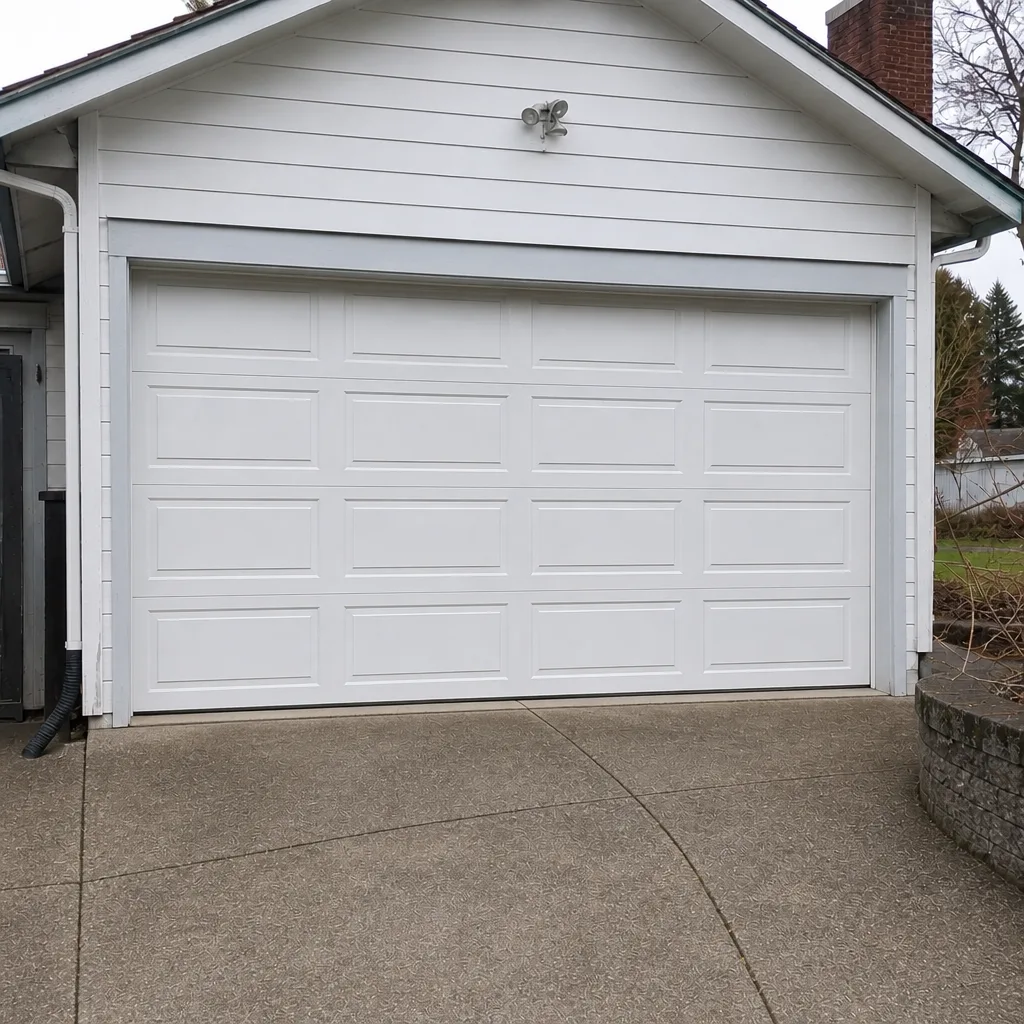
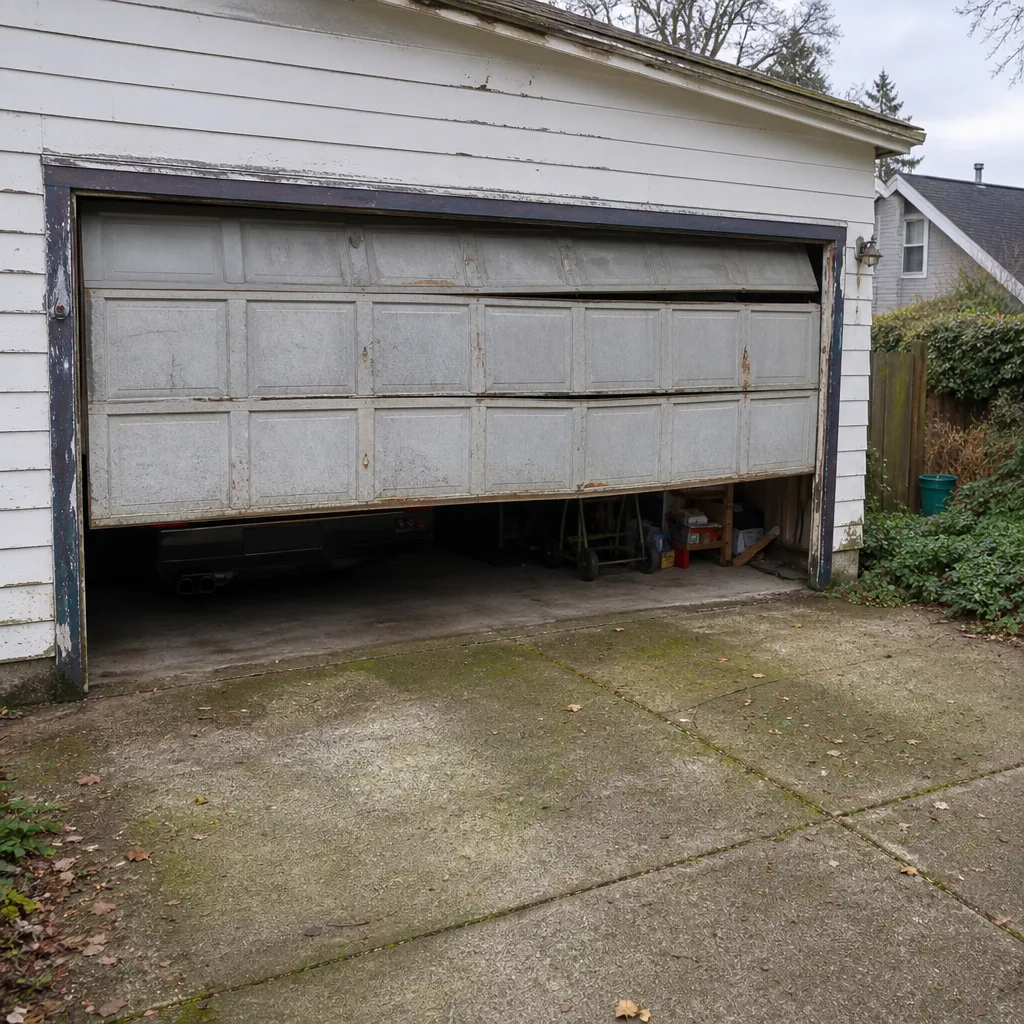
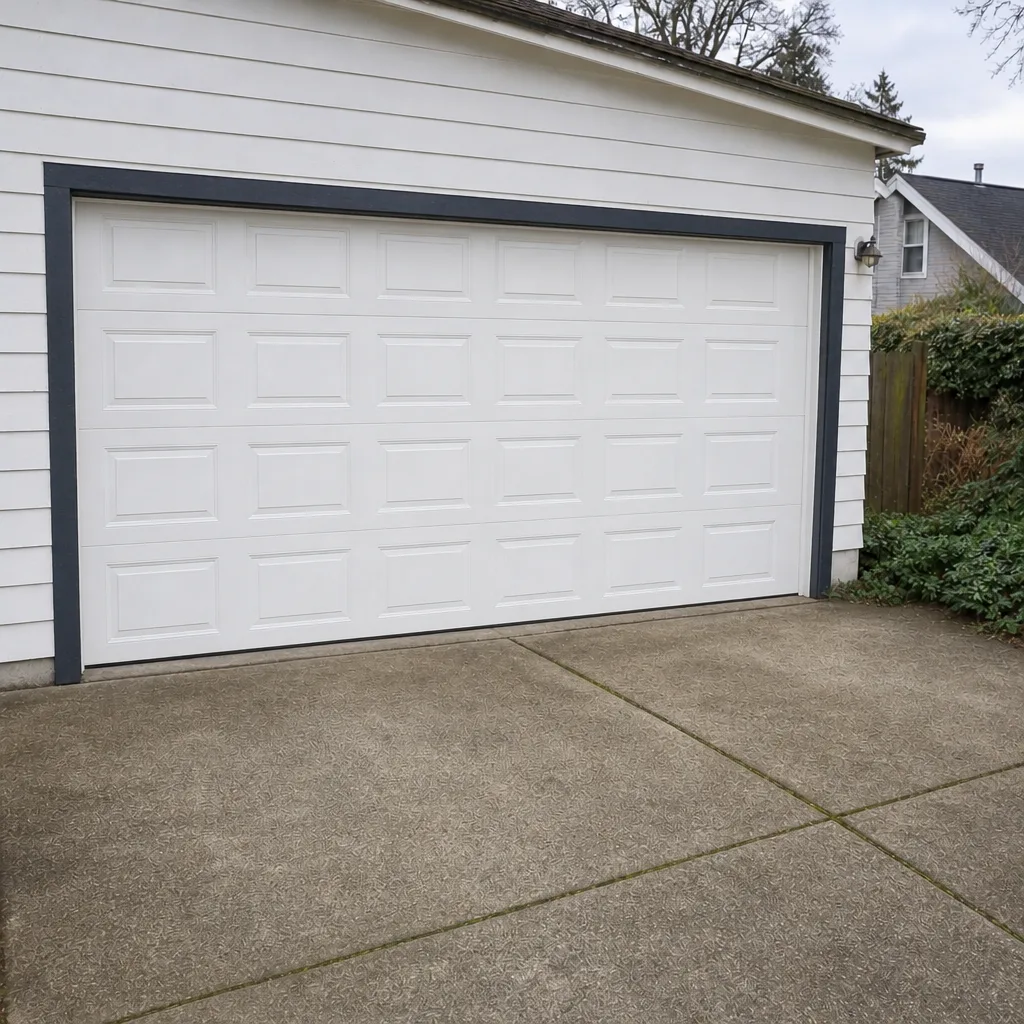
See the difference
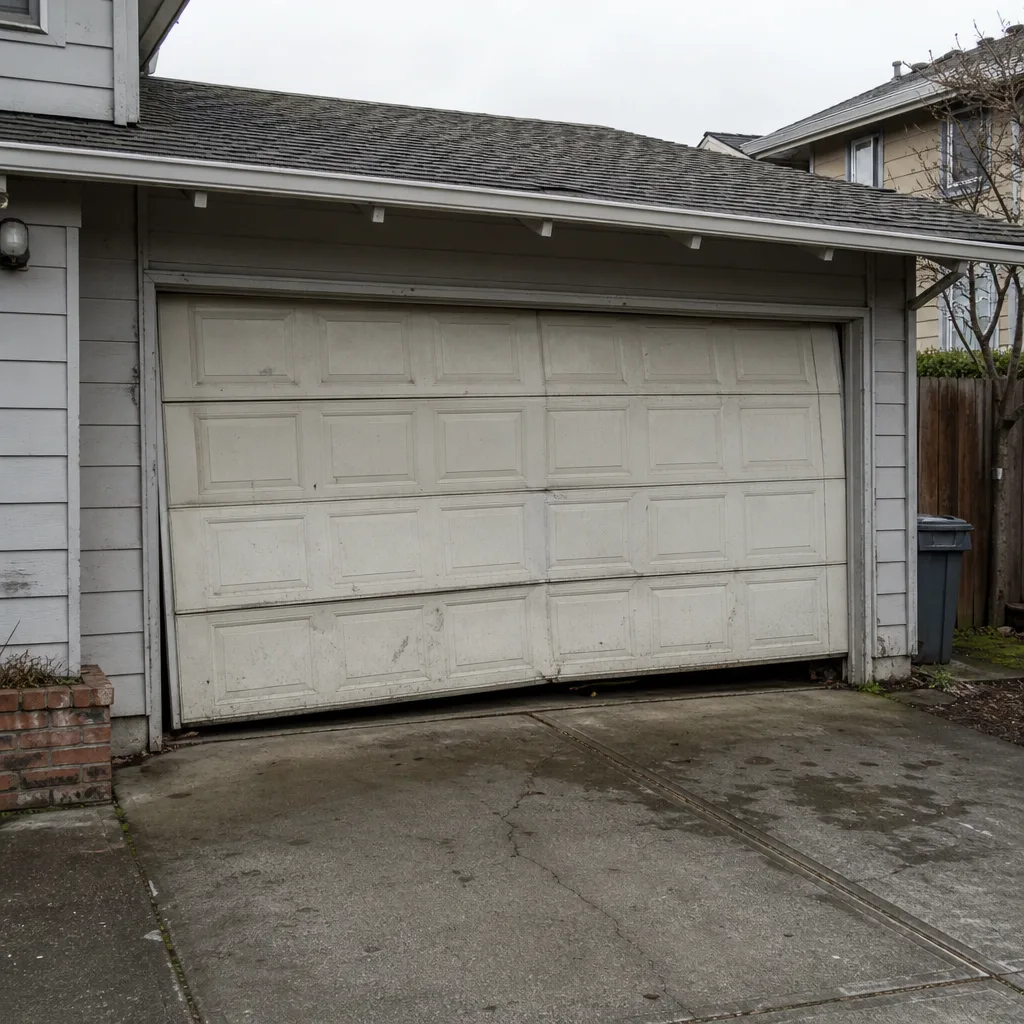 Before
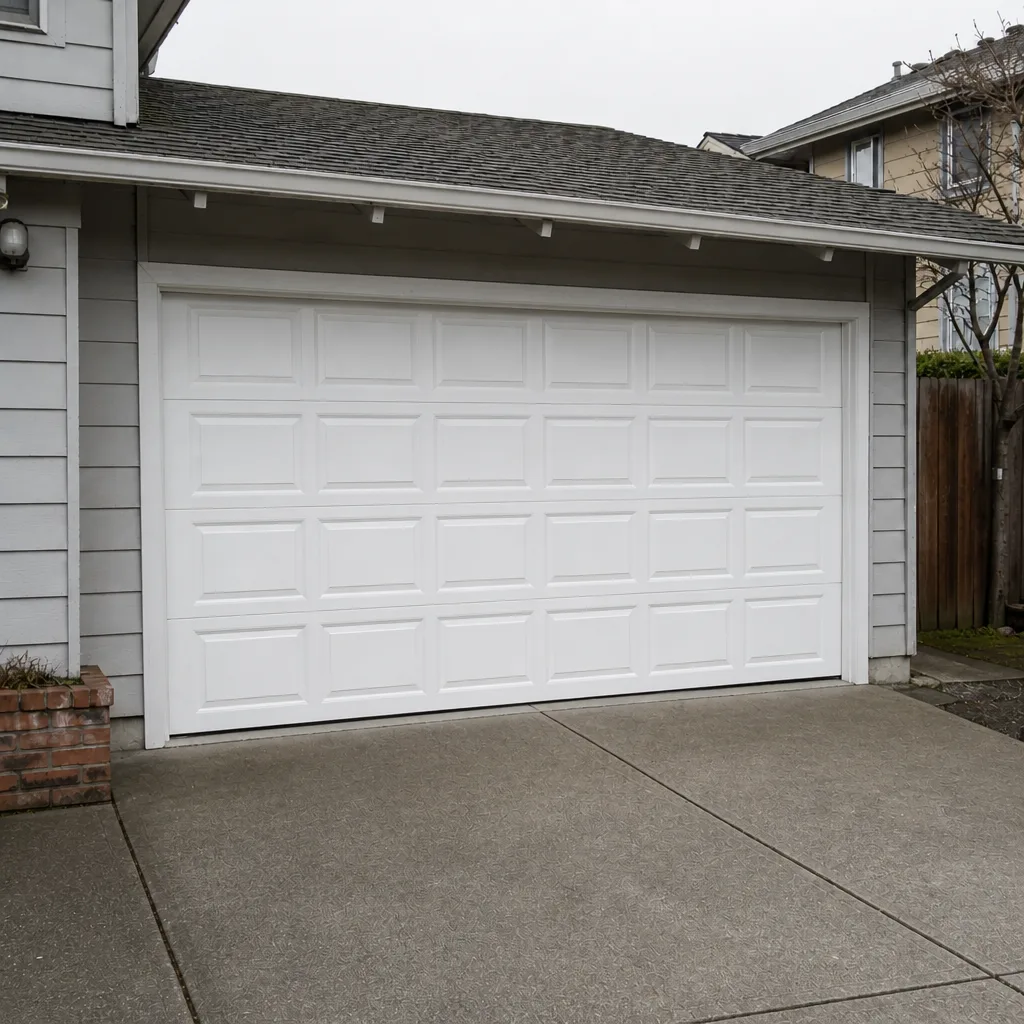 After
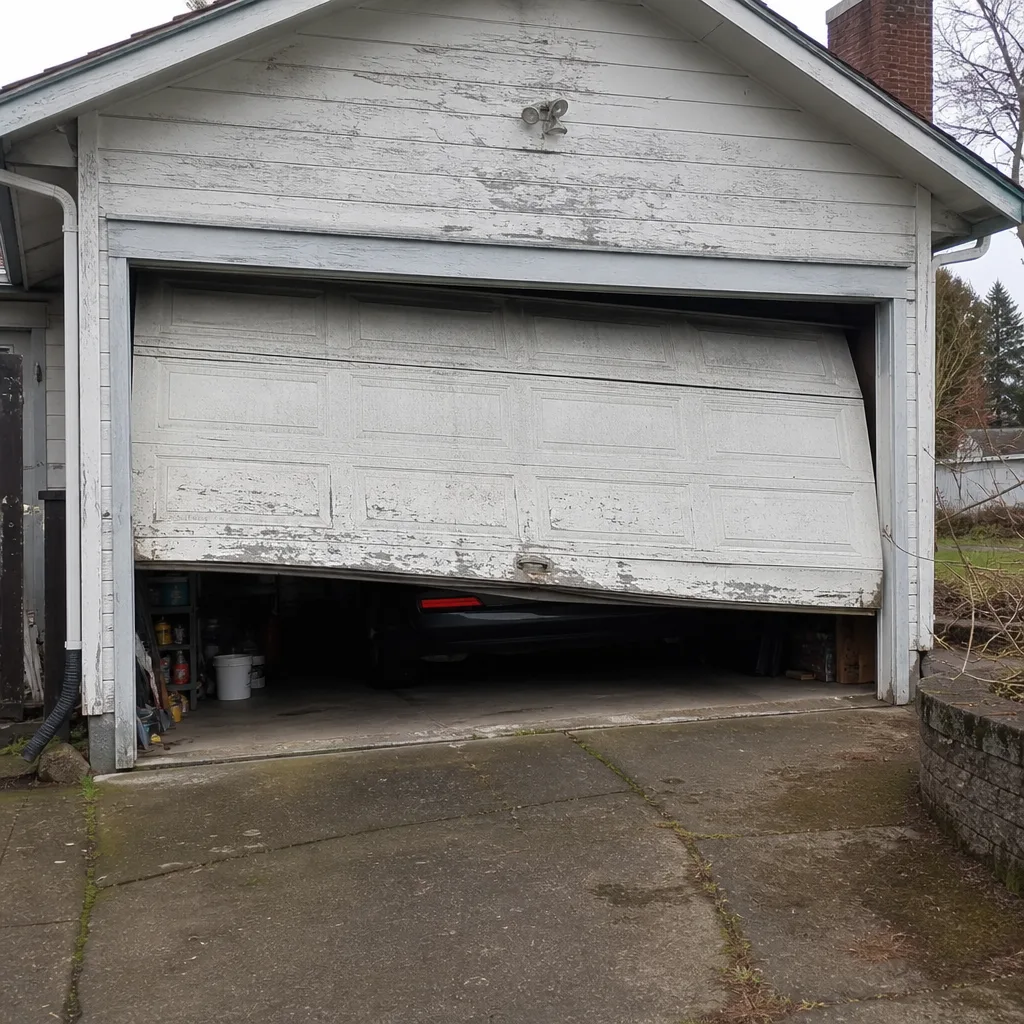 Before
 After
 Before
 After
When to Call a Professional
Some problems should never wait for a weekend project. Call a professional if your torsion spring has visibly broken, if the door has come off its tracks, or if the cable drum has unwound. Those are load-bearing failures where the risk of injury is real. The same goes for a door that reverses unpredictably, a door that binds at a specific point in its travel, or any situation where you’d need to reach over the spring to inspect it. If a door drops or slams instead of holding open, stop using it and call.
For anyone in Portland and the surrounding neighborhoods, a trained technician can diagnose the problem and give you a written estimate before any work starts. Shoreline Garage Door Service offers free estimates in Portland. Call (866) 942-7741. We answer 24/7. Fast dispatch from 7am to 7pm, Sunday through Friday.
Frequently Asked Questions
No, torsion spring replacement is not a safe DIY job. The spring stores enough energy to cause serious injury if it releases while you’re working on it, and proper installation requires the right winding bars and the knowledge of how to stay clear of the release path. Call a trained technician. If you’re in Portland, call (866) 942-7741 for a free estimate on spring replacement.
The safe DIY tasks are the non-load-bearing ones: replacing a bottom seal, adding weatherstripping, lubricating rollers and hinges, reprogramming an opener remote, and cleaning the photo-eye sensors. Anything that touches the springs, cables, drums, tracking, or structural header is professional work. If you’re unsure which category your issue falls into, call us and we’ll tell you over the phone.
If the door moves by hand and the opener runs but doesn’t lift it, that’s often a stripped gear or a broken part in the drive system, which needs a repair. If the remote doesn’t work but the wall control does, that’s usually a battery or programming fix you can handle. Our opener repair team works on LiftMaster, Chamberlain, Genie, and Craftsman systems and can diagnose it accurately. Call (866) 942-7741 to talk it through.
A DIY change to load-bearing parts of the garage door system can complicate an insurance claim if something fails later, because there’s no professional record of the work. Most policies don’t prohibit homeowner modifications outright, but the investigation after a failure becomes harder to resolve when the work isn’t documented. Keep receipts for any professional work, and have a technician inspect any DIY repair that involved springs or cables.
Permit requirements depend on the scope of the work and the specific project, so the reliable answer comes from Portland’s building department, not from a general guide. In practice, a straight like-for-like replacement often doesn’t require a permit, while altering the header or the structural opening usually does. Every door installation we handle is measured and quoted before work starts, and we can point you to the right questions to ask the city.
A garage-door-approved lubricant, a socket set that fits your hinge and roller bolts, safety glasses, a step ladder, and the manual for your opener. That’s enough for the safe maintenance tasks. You don’t need winding bars for spring work because that’s not a task that should be done by a homeowner at all. If you’re missing a part or aren’t sure what your door needs, call (866) 942-7741.
The Bottom Line
The DIY versus professional question for a Portland garage door comes down to one clear line: tasks that deal with stored mechanical energy and load-bearing structure belong with a trained technician, and everything else is fair game for a careful homeowner. Bottom seals, weatherstripping, lubrication, and opener programming are worth doing yourself and will save you real money. Springs, cables, drums, and structural work are not. If you keep that line in mind, you’ll avoid the most common and most expensive DIY mistakes, keep your door safe for your family, and know exactly when it’s time to call. And if the door itself ever needs replacing, the same professional team can measure, supply, and install a Clopay, Amarr, Wayne Dalton, or Raynor door without a handoff.
Call (866) 942-7741 for a free estimate. We answer 24/7. Fast dispatch from 7am to 7pm, Sunday through Friday.
Written by the team at Shoreline Garage Door Service, serving Portland since 2016.