
Last updated November 14, 2026
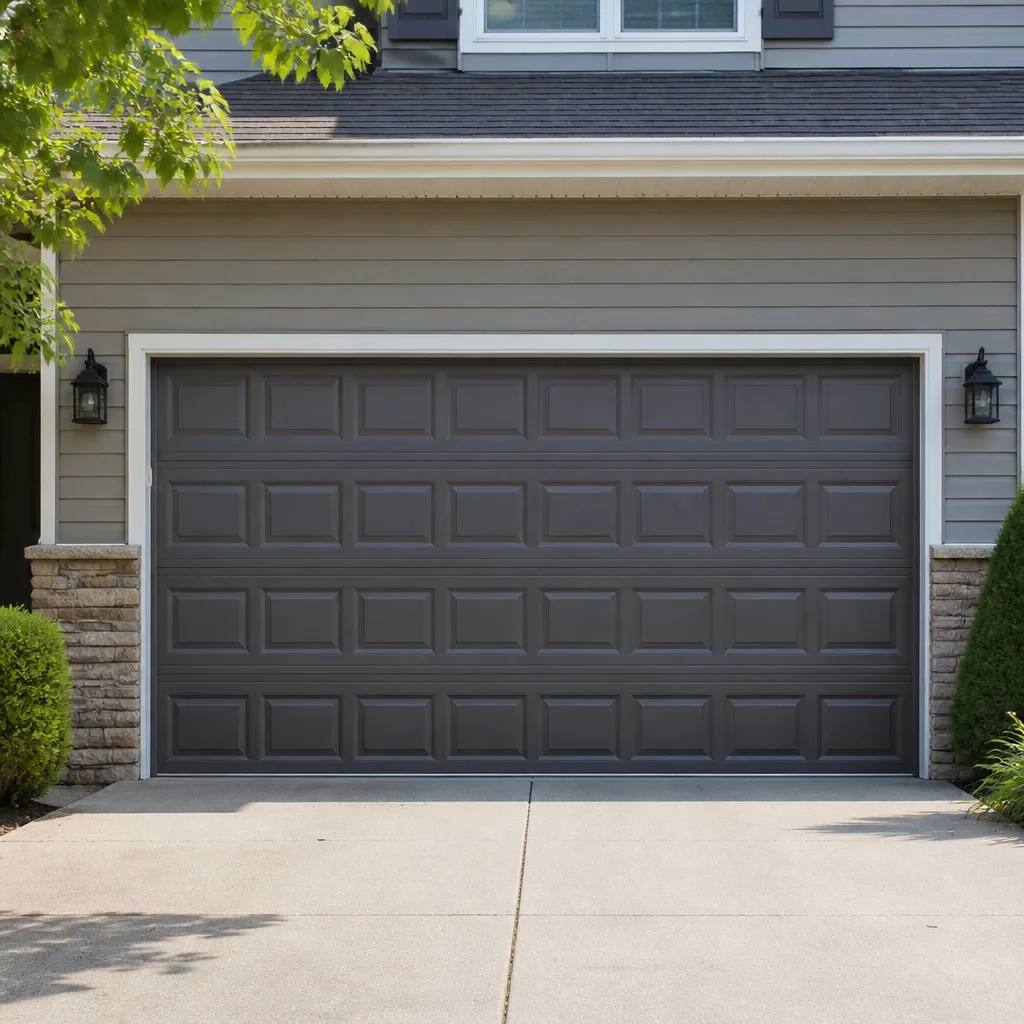 Raised-panel steel
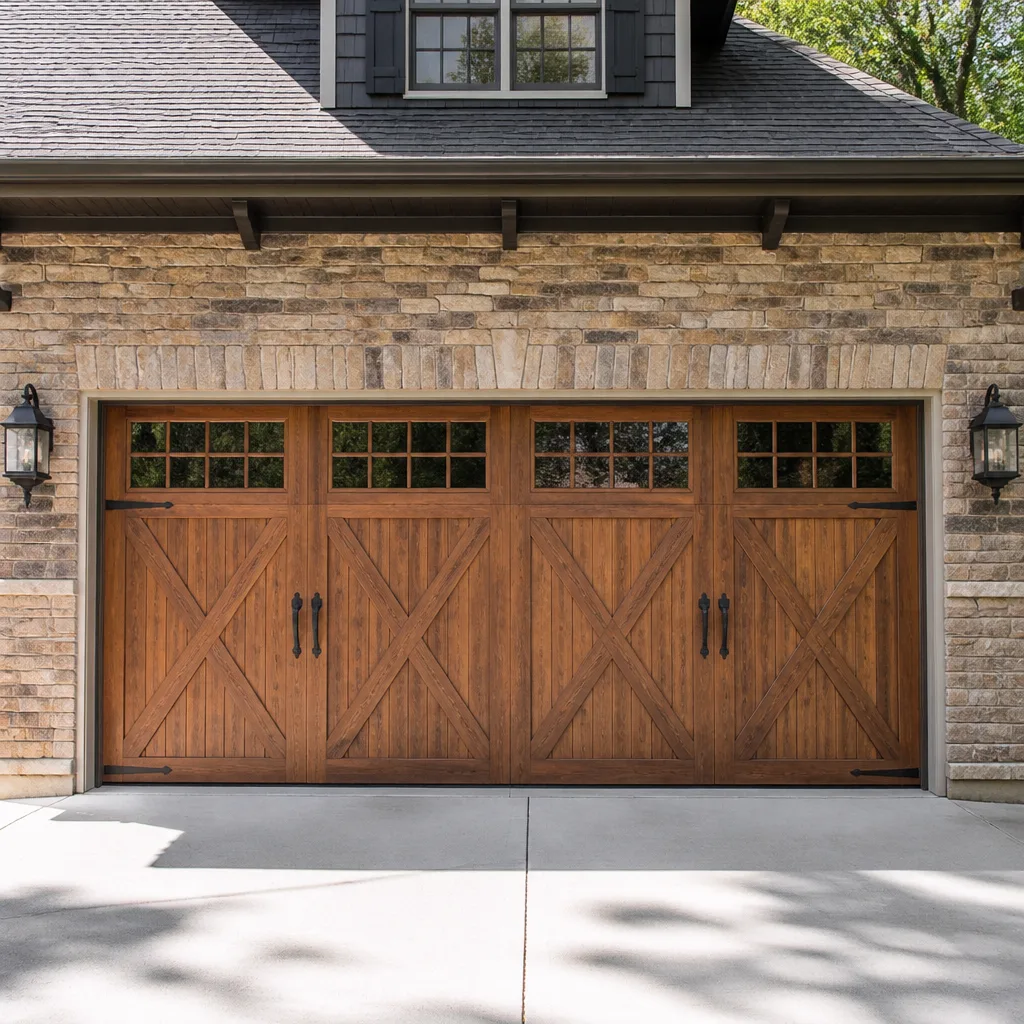 Carriage house
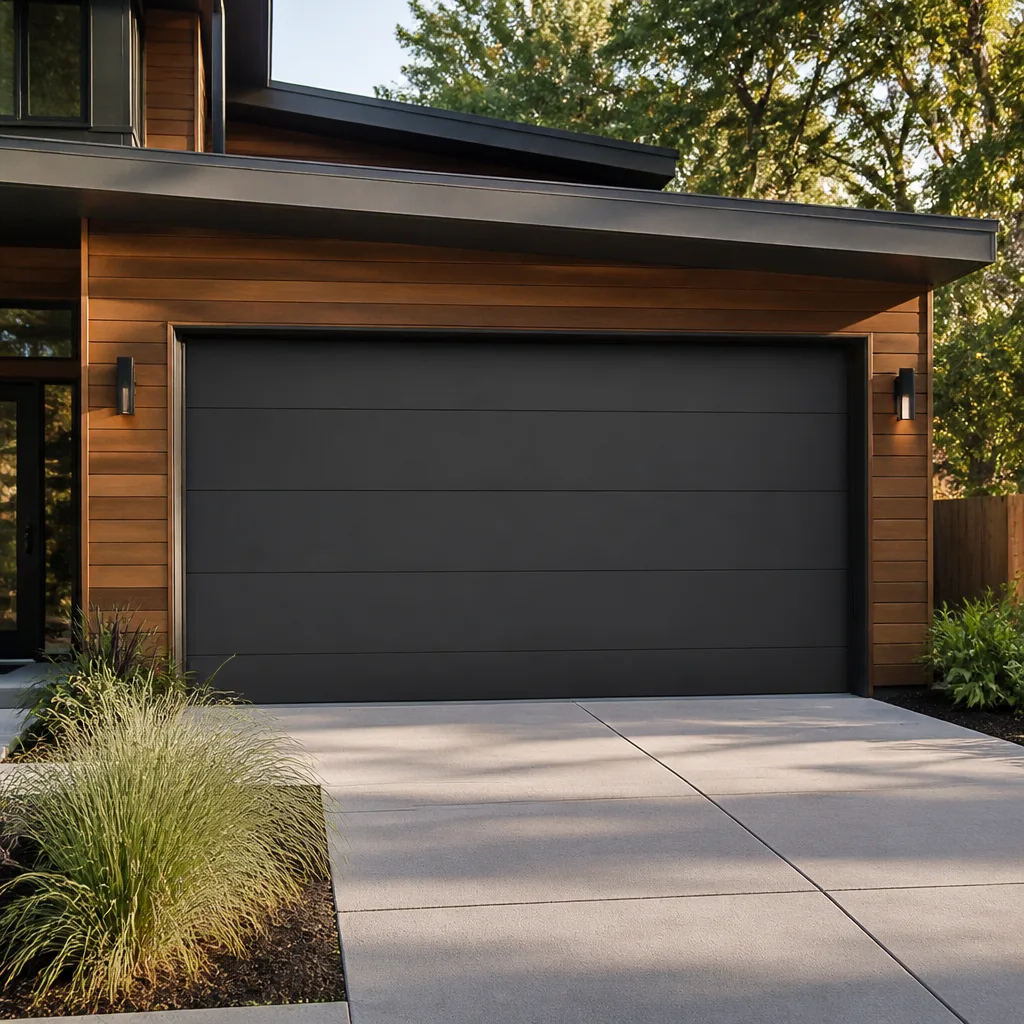 Modern flush
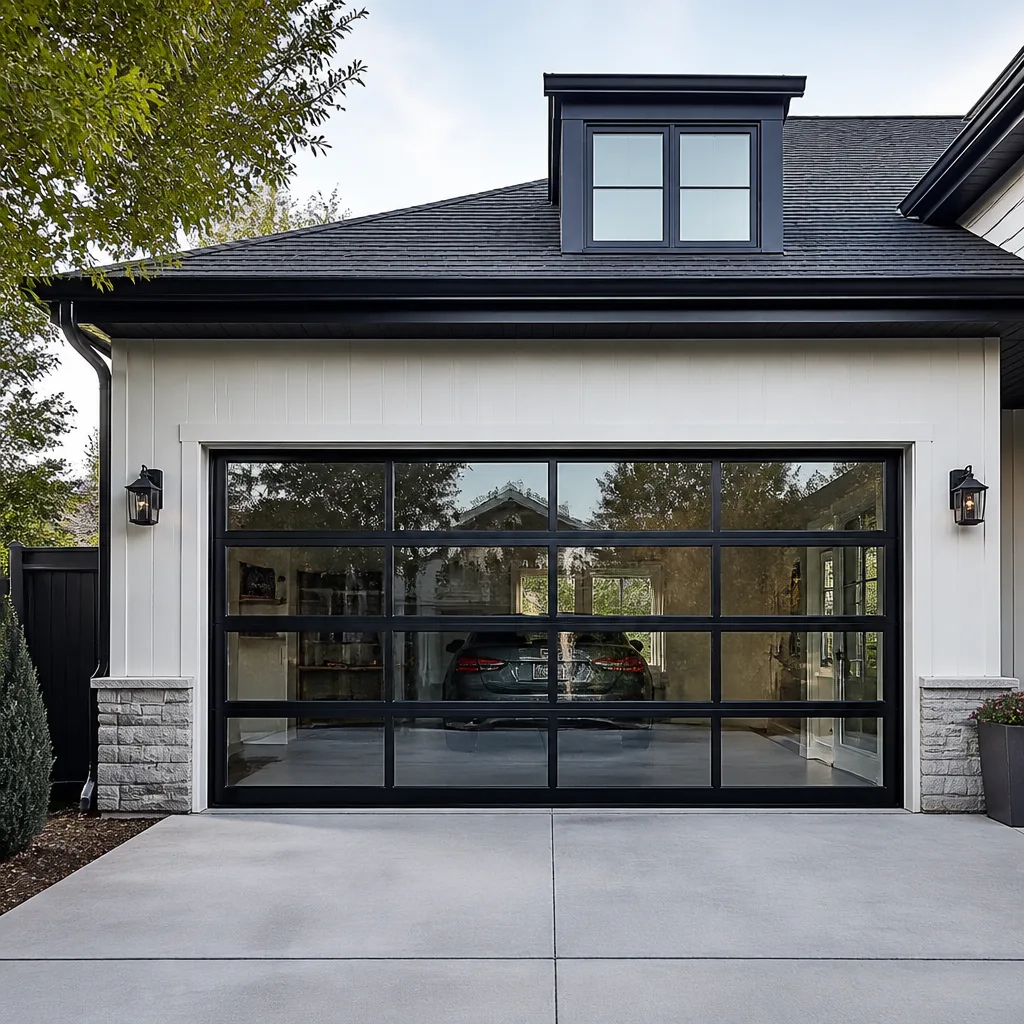 Full-view glass
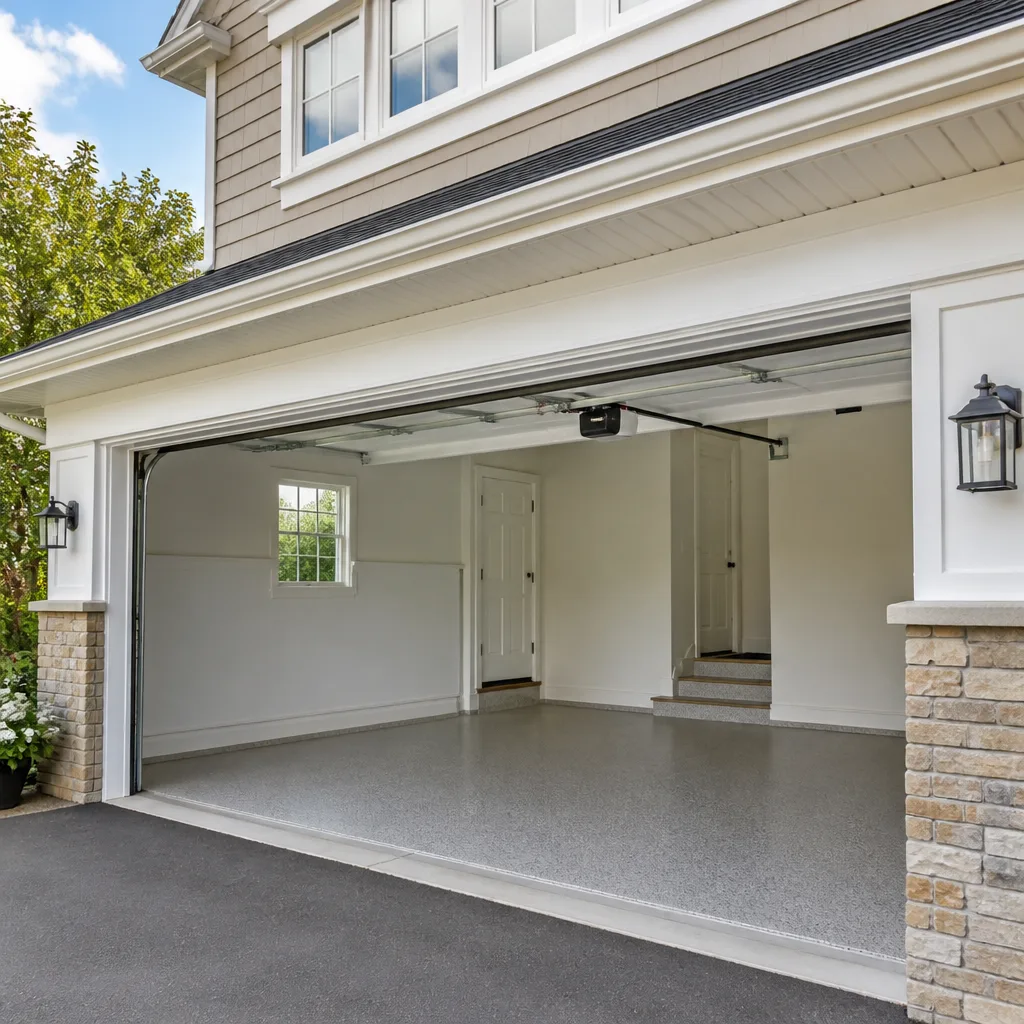 LiftMaster openers
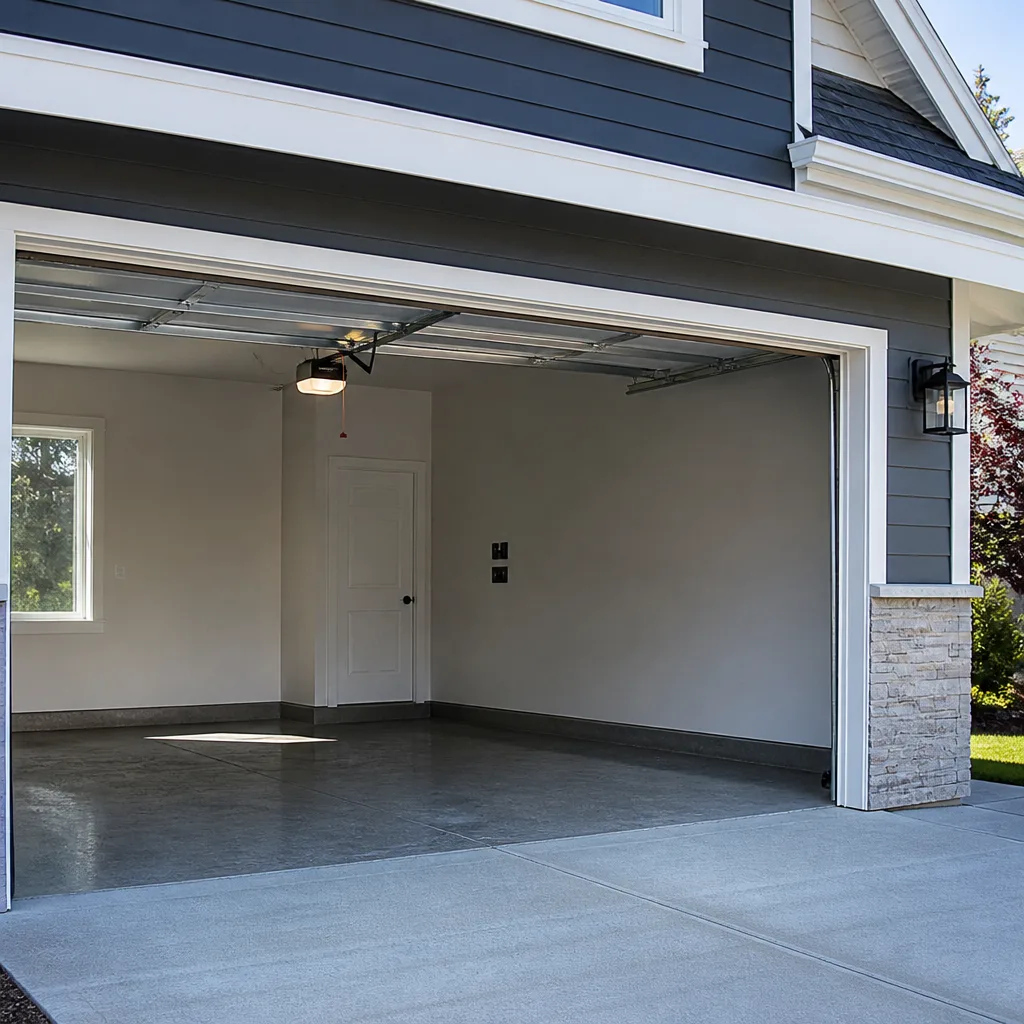 Chamberlain openers
Full 25-point door and opener safety check with every visit - springs, cables, rollers, tracks, and your LiftMaster or Chamberlain opener included
You get a price before we start. It does not change when the truck arrives.
Get your free estimateGarage Door Repair Maintenance Checklist for Portland Homeowners
The number-one repair call in Portland isn’t a broken spring or a dead opener. It’s a bottom seal that rotted quietly over two rainy seasons and let moisture warp the door panel from the inside out. Springs snap loudly and openers quit with a groan, so those get noticed. Water doesn’t announce itself. It seeps under a flattened seal, wicks into the panel core, and by the time the door starts to bind or look wavy, the damage is older than the homeowner thinks. This guide walks you through the checks that actually catch Portland’s slow failures, timed to our wet and dry seasons, with the sounds worth reporting and the ones you can safely ignore.
Quick Answer
A garage door maintenance checklist for Portland should focus on moisture first: inspect the bottom seal for compression and rot, check end caps and horizontal tracks for corrosion, and test weatherstripping against the frame before and after the rainy season. Time deeper checks to late summer (July through September) and again in October before the rain returns. Springs, cables, and opener wiring are inspection-only jobs for a trained technician.
Styles & brands we work with
- Raised-panel steel
- Carriage house
- Modern flush
- Full-view glass
- LiftMaster openers
- Chamberlain openers
Table of Contents
- Why Moisture, Not Springs, Is Portland’s Top Door Problem
- Step 1: Inspect the Bottom Seal and End Caps
- Step 2: Check Tracks and Hardware for Rust
- Step 3: Test Weatherstripping Compression Against the Frame
- The Portland Maintenance Schedule: Dry Season and Pre-Rain
- Choosing Lubricants That Hold Up in Wet Weather
- Five Sounds to Log and Three to Ignore
- What to Check Yourself and What to Leave Alone
Why Moisture, Not Springs, Is Portland’s Top Door Problem
Portland’s rainy season runs long, and a garage door faces it head-on every time it closes. The door panel is a wide, flat surface sitting inches from a wet driveway, and the seal under it is the only thing standing between that moisture and the wood or steel core. In our experience, a seal that stops making firm contact lets water creep in on every storm. The panel soaks it up slowly. Paint bubbles near the bottom. The core softens. None of this shows up overnight, which is exactly why it goes unnoticed until the door is out of balance, sticking, or visibly warped.
Springs and openers fail in ways you can’t miss. A torsion spring breaks with a bang that echoes through the house. A LiftMaster or Chamberlain opener that quits leaves the door stuck and the car trapped. Those problems announce themselves. Moisture damage doesn’t. It works quietly and it costs more to fix the longer it sits. That’s the case for making moisture the first item on your checklist, not the last.
Portland’s older homes make this worse. Many garages here were built before modern seals, and the door frames have shifted with the ground and the years. A frame that’s slightly out of plumb puts uneven pressure on the weatherstripping, so one side of the seal wears thin while the other still looks fine. You can’t spot that with a quick glance. You have to check it.
Step 1: Inspect the Bottom Seal and End Caps
The bottom seal is the rubber or vinyl strip along the bottom edge of the door. It’s the first line of defense and the first thing to fail. Check it in late summer, when the dry months have revealed any cracking, and again in early spring, after the rain has had its way with it.
- Close the door and look at the seal from the inside. It should press firmly against the floor along its full width. If you can see daylight or slide a piece of paper under it in spots, it has lost its compression.
- Run your hand along the seal and feel for soft spots, cracks, or places where the rubber has gone brittle and flaky. A seal that feels spongy or crumbles at the edge is past saving.
- Look at the end caps, the metal or plastic fittings at each end of the bottom section. In Portland’s damp conditions, these are where corrosion shows first. White or rust-colored buildup at the end caps means water is getting in.
- Open the door and inspect the underside of the bottom panel. If the paint is peeling, the wood feels soft, or the panel looks swollen, moisture has already gotten past the seal.
If the seal is worn, replacing it is a simple fix that prevents a much larger one. If the panel itself is soft or warped, that’s a sign the damage has gone deeper and you’ll want a technician to evaluate whether the section can be repaired or needs replacement. Brands like Clopay and Amarr make replacement sections that match common door profiles, so a single damaged panel doesn’t always mean a whole new door.
Step 2: Check Tracks and Hardware for Rust
Rust on a garage door track is a Portland tell. It appears first on the horizontal tracks, the long rails that carry the door overhead, because those sections sit under the ceiling where condensation gathers and don’t dry out as fast as the vertical tracks. A light haze of surface rust on a track can be cleaned and treated. Pitting or flaking rust means the metal is weakening, and a track that’s rusted through can’t keep the door aligned.
- Run a hand along the inside surface of each horizontal track. It should feel smooth. Gritty patches are the early stage of rust.
- Check the hinges and rollers for rust-colored dust or dark staining. A hinge that’s seized won’t pivot, and that strains the door panel every time it opens.
- Look at the lag screws and bolts that hold the tracks to the frame. In older Portland garages, these are often the first fasteners to rust and loosen. A loose track lets the door wobble, and wobble accelerates wear.
- Check the springs for visible rust, particularly at the coils. Rusty torsion springs are a warning sign of metal fatigue. Don’t touch them. Note it and call a technician.
A Craftsman or Wayne Dalton door that’s ten years old and has never had its hardware checked is a good candidate for a professional tune-up. Loose fasteners, worn rollers, and rusted hinges are all things a technician can catch and correct in a single visit, before they turn into a door that won’t close straight.
Step 3: Test Weatherstripping Compression Against the Frame
The weatherstripping around the sides and top of the door runs along the frame, not the panel. It’s meant to compress against the door when it closes, sealing out drafts and rain. In Portland, where garages are often attached to the house and the door faces the weather, a failed side seal lets water and cold air straight into the garage.
Testing compression is simple. Close the door and look at the strip from inside the garage. It should be pressed flat against the door surface. If it’s flattened so far it no longer springs back, it’s worn out. If it’s barely touching, it’s not sealing. Now look at the gap between the door and the frame at the sides. An older Portland garage frame that has settled or shifted can sit out of plumb, which means the gap varies from top to bottom. A door hung on an out-of-plumb frame will rub on one side and gap on the other.
You can check plumb with a level held against the frame. If the bubble is off, the frame is leaning and the weatherstripping can’t seal evenly no matter how new it is. This is one of the most common things we see on older homes, and it’s the reason a fresh seal sometimes still leaks. Adjusting the door’s travel and hardware to match the frame is a job for a technician who can see how the whole system reacts.
The Portland Maintenance Schedule: Dry Season and Pre-Rain
Generic garage door advice tells you to check twice a year, spring and fall. That timing is built for climates with different weather patterns. In Portland, the seasons that matter are the dry stretch of July through September and the return of the rain in October. Sequence your checks around those, not the calendar’s conventional advice.
July through September: The Deep Check
The dry months are when you can spot problems that the rain has been hiding. The seal has had months to dry and crack. The wood panels are dry enough to inspect for softness. Rust is visible without fresh moisture masking it. This is the window to look for every deficiency and fix it before the wet season starts.
- Inspect the bottom seal and side weatherstripping for cracks and compression loss.
- Check the horizontal tracks and end caps for rust.
- Test the door’s balance. Disconnect the opener, open the door halfway, and let go. A balanced door holds position. One that drops or rises needs adjustment.
- Have a technician check the springs, cables, and opener wiring. These are the parts you don’t test yourself.
- Lubricate hinges, rollers, and the track surface with a product made for the job, then clear the track of debris.
October: The Pre-Rain Check
Before the rain settles in, confirm the seal is still making contact and the weatherstripping is compressed against the frame. This is also when you clear leaves and debris out of the track and garage door area. Debris that stays in the track through the wet months holds moisture against the metal and speeds corrosion. A quick October pass sets the door up to survive the rainy season without damage.
Choosing Lubricants That Hold Up in Wet Weather
Not all garage door lubricants are equal, and in Portland’s sustained damp the difference matters more. The wrong product either washes off, thickens into a paste that traps grit, or attracts dust that works its way into the rollers. The right one stays put, sheds water, and doesn’t collect debris.
We use a garage door-specific lubricant on hinges, rollers, and the torsion spring coils. For the track itself, silicone spray or a dry film product works better than heavy grease because it doesn’t gunk up or hold dust. A light, even coat is enough. Over-lubricating is its own problem: excess product attracts dirt, and thick grease on a track can make rollers slide instead of roll.
- Good for wet weather: silicone spray and dry film lubricants that bond to metal and resist water.
- Fine for hinges and rollers: a dedicated garage door or lithium-based lubricant that stays in place.
- Avoid: heavy grease that collects grit, WD-40 as a long-term lubricant, and anything that stays tacky for weeks.
Apply lubricant in the dry months when surfaces are clean and dry, then reapply if you notice the door getting noisy. A well-lubricated door runs quieter and puts less strain on the opener, which matters whether you’re running a legacy Craftsman unit or a newer smart-home-compatible Genie.
Five Sounds to Log and Three to Ignore
Noise is the most honest signal a garage door gives you. Most failures make a sound before they happen. The trick is knowing which sounds mean something and which are just a door being a door. Log anything on the first list and mention it when you call.
Sounds Worth Logging and Reporting
- A sharp bang from overhead. This is the signature of a breaking torsion spring. If the door suddenly won’t open or feels unusually heavy, stop and call a technician. Don’t try to cycle it again.
- A rhythmic clunk or thunk. Usually a worn roller, a loose hinge, or a track that’s out of alignment. It tends to get worse over time, so catch it early.
- A grinding or scraping sound. Metal-on-metal grinding means something is rubbing that shouldn’t be. It could be a track that’s come loose or a roller that’s worn through.
- A popping or snapping from the opener. A LiftMaster or Chamberlain opener that pops may have a worn gear or a failing drive. It’s worth diagnosing before it stops mid-cycle.
- A high-pitched squeal. Usually dry hinges or roller bearings. Lubrication often cures it, but if it returns quickly it may point to worn parts.
Sounds You Can Safely Ignore
- The soft hum of the opener motor. That’s normal operation.
- A light tap as the seal meets the floor. That’s the door closing as designed.
- A brief rattle from a hollow-panel door in the wind. Normal on lighter doors, especially on a blustery day.
If you hear anything on the first list and you’re not sure what it means, stop using the door and have it looked at. A loud bang or a door that won’t lift is a safety issue, and a trained technician can diagnose it fast without making anything worse.
What to Check Yourself and What to Leave Alone
The checklist above keeps you on the safe side of the line. Some tasks are fine for a homeowner: checking the seal, looking for rust, testing balance with the opener disconnected, clearing debris, lubricating hinges and rollers. Others are not.
- Don’t adjust the torsion springs. They carry enough stored energy to cause serious injury if they slip. A broken spring or a spring that’s lost tension is always a professional job.
- Don’t touch the cables. The cables that lift the door are under tension and can snap without warning. Leave them to a technician.
- Don’t work on the opener’s wiring or electrical connections. Disconnect the power and call a trained technician if you suspect an electrical issue.
- Don’t loosen or remove the track brackets to fix alignment. A door that comes off its track is heavy and unpredictable. That’s a job for someone who knows the system.
If a spring, cable, or electrical problem is behind the sound or symptom, we recommend a pro. Our garage door repair team handles those jobs every week in Portland, and calling early usually means a simpler fix than waiting. If the issue traces to the motor, gearing, or a remote that won’t sync, our garage door opener repair service covers the brands most common in Portland homes.
Common Mistakes to Avoid
- Checking the seal only in summer. Portland’s wet season does the most damage, so a seal that looks fine in July may be failing by February. Check it in October too, before the rain settles in.
- Greasing the track. Many homeowners reach for heavy grease on the track. In Portland’s damp, it traps grit and holds moisture against the metal, which speeds rust. Use a dry film or silicone spray instead.
- Ignoring a gappy side seal. A weatherstrip that doesn’t compress against the frame lets rain in along the sides of the door. On an older, out-of-plumb Portland garage frame, the gap is often worse than it looks from the outside.
- Testing the door balance with the opener connected. The opener masks an unbalanced door. Disconnect it before you test, or you’ll never know if the springs are doing their job.
- Treating a broken spring as a DIY repair. Springs are the most dangerous component on the door. Don’t attempt to replace one yourself. Call a technician.
- Skipping the pre-rain debris clear. Leaves and grit trapped in the track through the wet months hold moisture and rust the metal. A few minutes in October saves a repair later.
- Assuming panel damage means a new door. A single warped or soft panel can often be replaced with a matching section from a brand like Clopay or Amarr, so get a diagnosis before you assume the worst.
See the difference
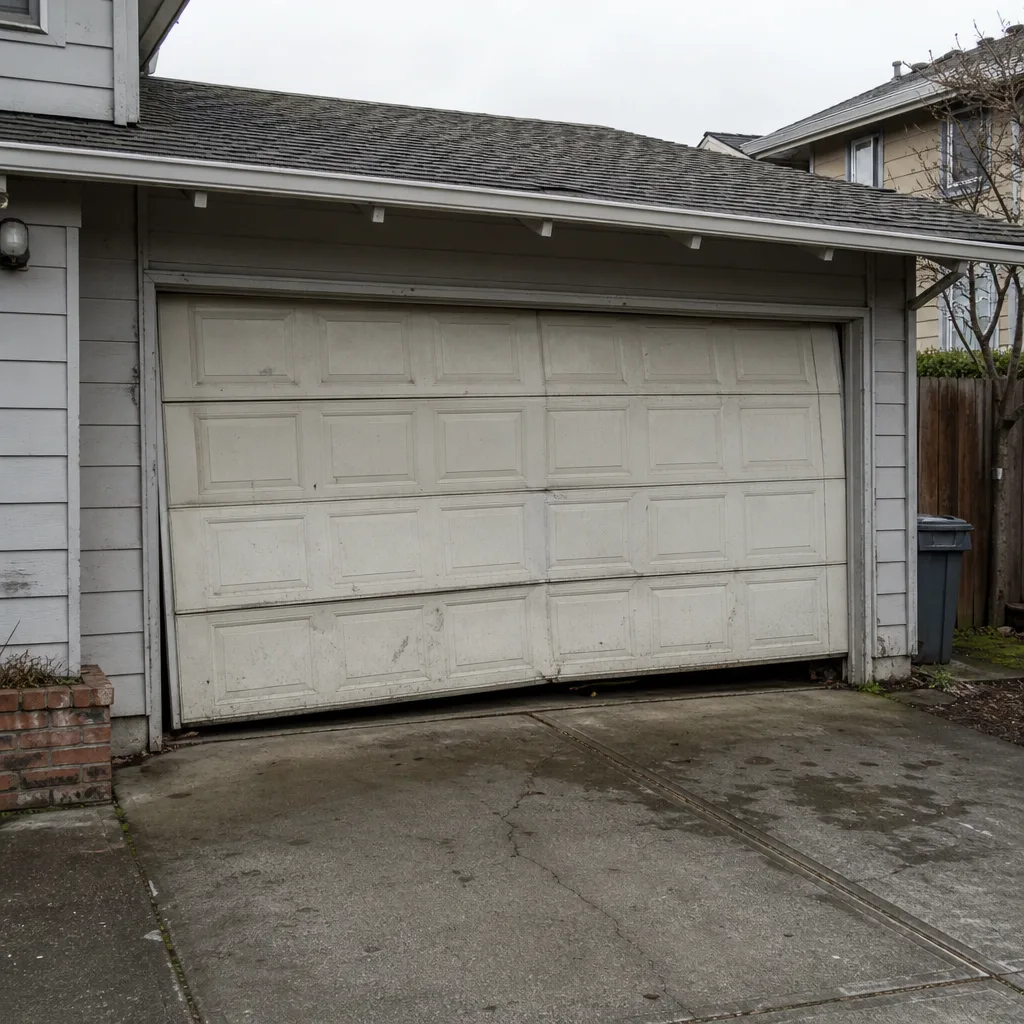 Before
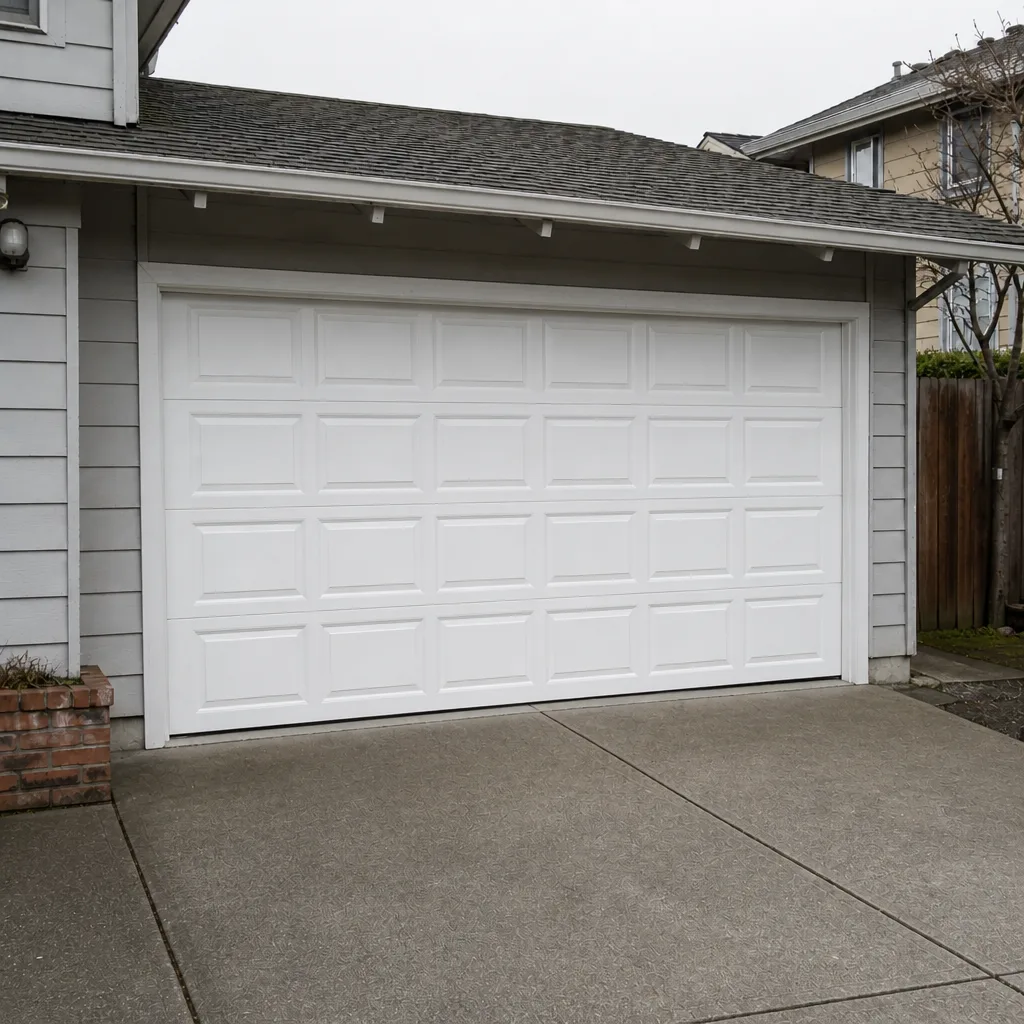 After
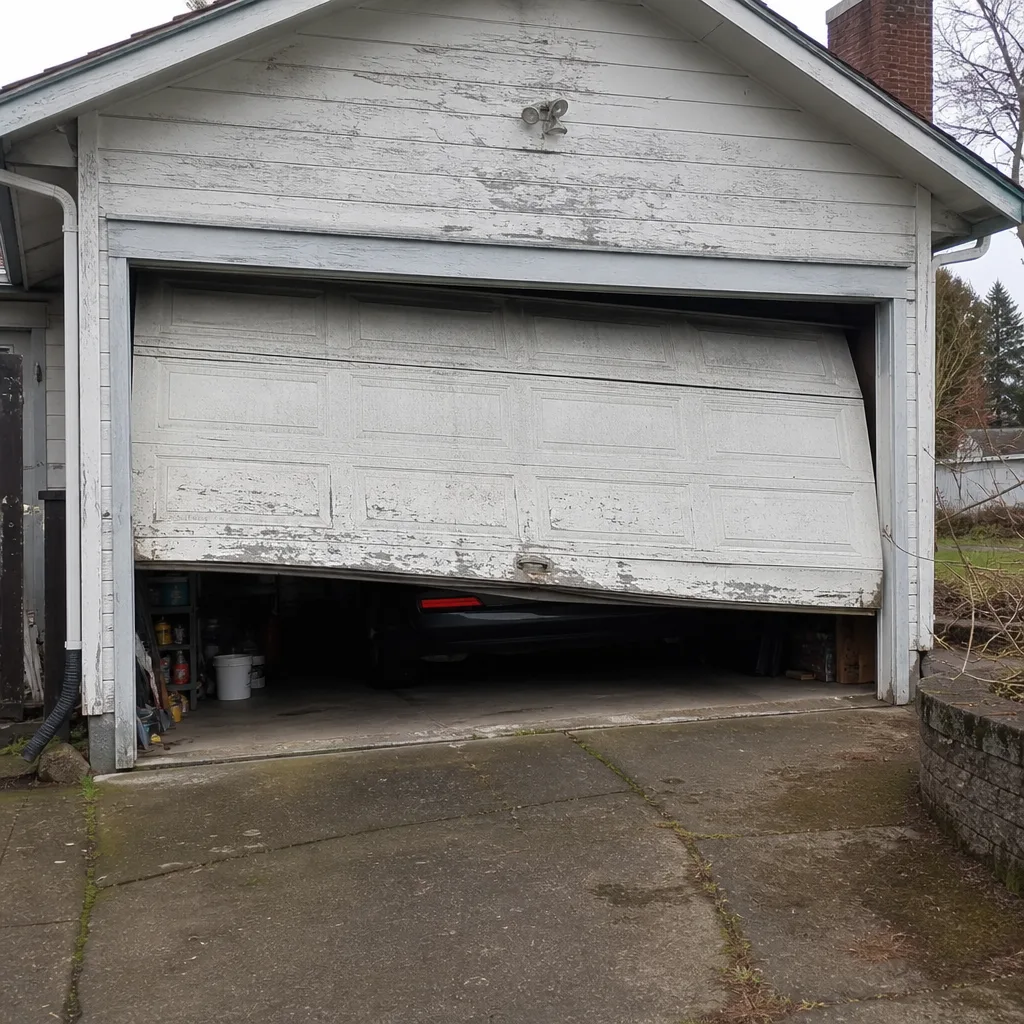 Before
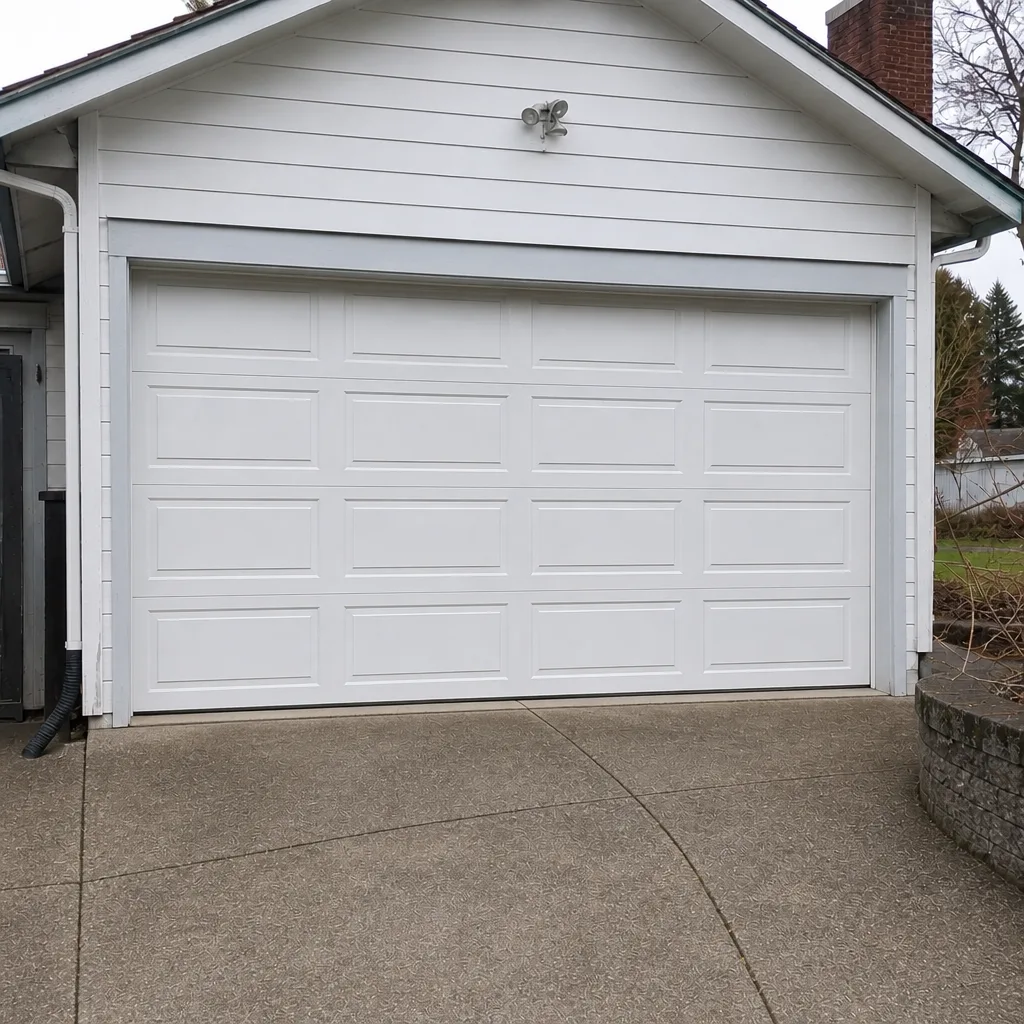 After
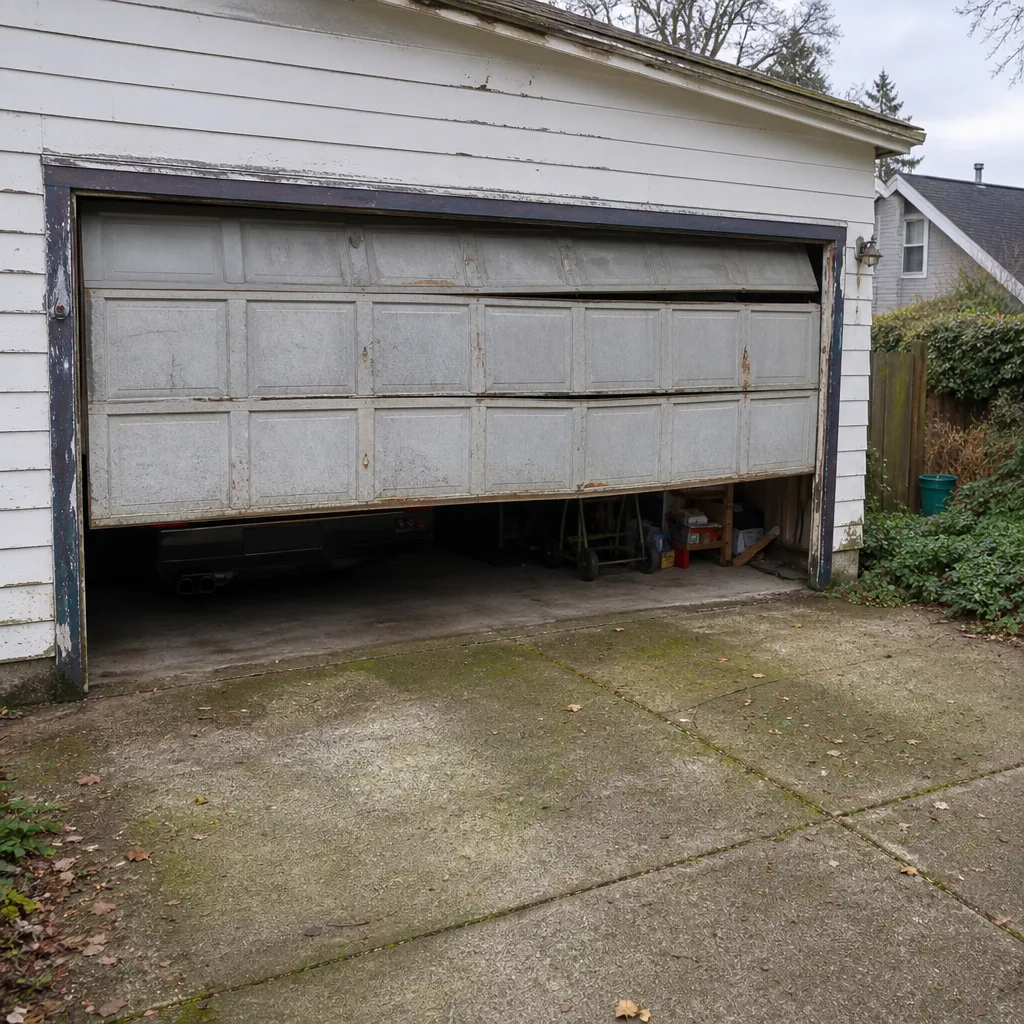 Before
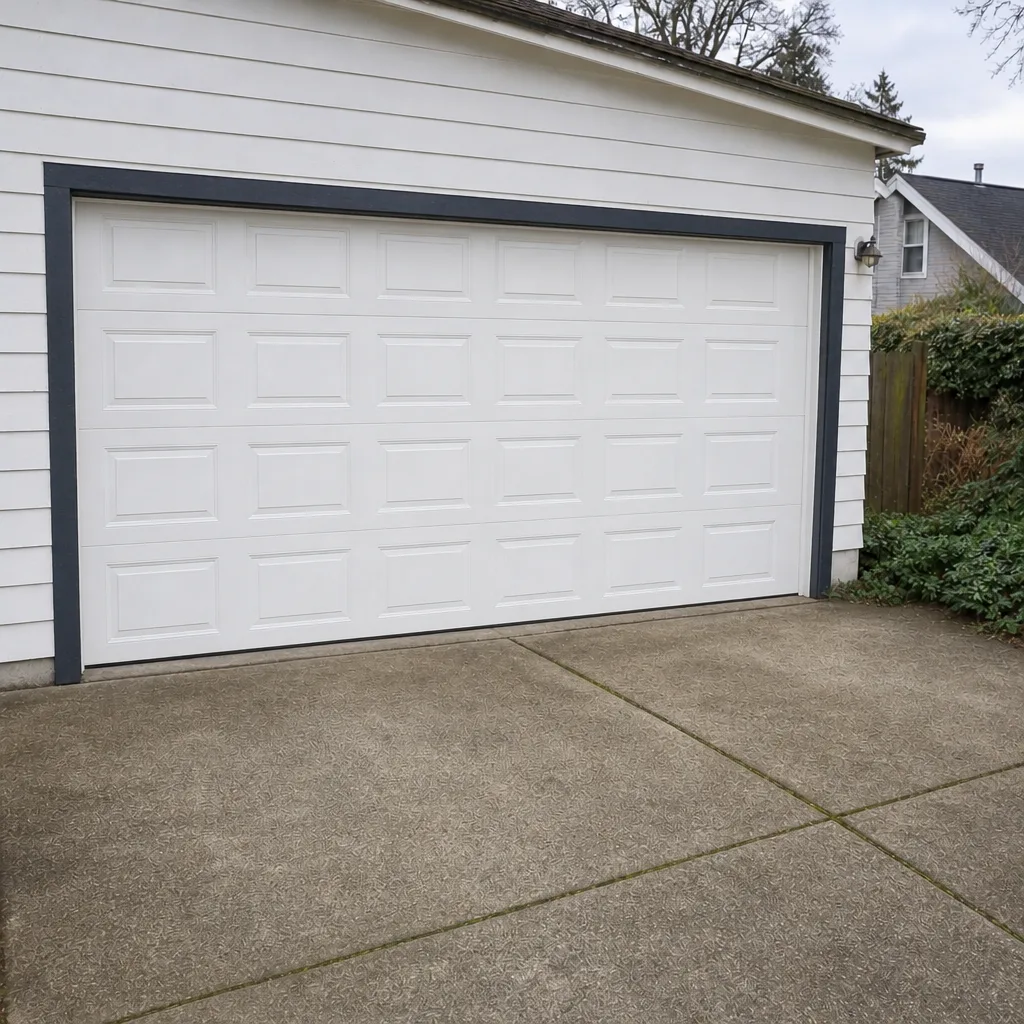 After
When to Call a Professional
Some symptoms are clear signs the door needs a trained eye. Call us if a spring is broken or the door suddenly feels too heavy to lift. Call if you hear a sharp bang, if the door comes off its track, or if it won’t close evenly. Call if the opener runs but the door doesn’t move, or if the motor cycles and stops. And call if you’ve checked the seal and it’s still leaking after replacement, because that usually points to a frame or alignment issue. Shoreline Garage Door Service offers free estimates in Portland. Call (866) 942-7741. We answer 24/7. Fast dispatch from 7am to 7pm, Sunday through Friday.
Frequently Asked Questions
Twice a year, timed to Portland’s dry season and the return of the rain. Do the deep check in July through September, when you can spot cracks, rust, and panel damage the wet weather masks. Do the pre-rain pass in October to confirm the seal is making contact and the tracks are clear. Call (866) 942-7741 for a free estimate if anything on your check turns up a problem.
A worn bottom seal that lets moisture damage the lower panel, in our experience. Springs and openers get the attention because they fail loudly, but seals fail quietly and cause panel damage that costs more to fix the longer it sits. Check the seal in summer and again before the rain, and call us if the panel feels soft.
Silicone spray or a dry film lubricant for the tracks, and a garage door-specific or lithium-based product for hinges, rollers, and spring coils. Avoid heavy grease because it collects grit and holds moisture against the metal. Apply it in the dry months, then call (866) 942-7741 if the door stays noisy after lubricating.
Often yes, if the seal slides into a track on the bottom section and the panel underneath is sound. If the panel is soft, warped, or shows moisture damage, the seal alone won’t fix it. That’s the point to call a technician. (866) 942-7741 reaches us for a free estimate.
Look for rust at the coils, a door that feels heavy when opened by hand, or a loud bang from overhead. If you see any of those, stop using the door and call a technician. Spring replacement is not a safe DIY job because the springs hold enormous tension. Our team handles it. Call (866) 942-7741.
A sharp bang, a rhythmic clunk, grinding or scraping, popping from the opener, or a high-pitched squeal. The bang and the grinding are the ones to treat most urgently. A soft hum, a light tap at the floor, and a rattle in the wind are usually normal. If you hear something on the first list, call (866) 942-7741 for a free estimate.
The Bottom Line
Portland’s garage door problems are mostly moisture problems wearing different clothes. The seal, the end caps, the horizontal tracks, and the weatherstripping against an out-of-plumb frame are where the damage starts. Time your checks to the dry season and the pre-rain window in October, use a lubricant that resists damp, and log the sounds that mean something. Springs, cables, and opener wiring are inspection-only. If your checklist turns up a problem, get it looked at before the rain has another season to work. Shoreline Garage Door Service works on the major brands found in Portland homes, from LiftMaster and Chamberlain openers to Clopay and Amarr doors, and one call covers repair, opener service, and new installation. Call (866) 942-7741 for a free estimate. We answer 24/7. Fast dispatch from 7am to 7pm, Sunday through Friday.
Written by the team at Shoreline Garage Door Service, serving Portland since 2016. Learn more about Shoreline Garage Door Service and our work across Portland.