
Last updated November 14, 2026
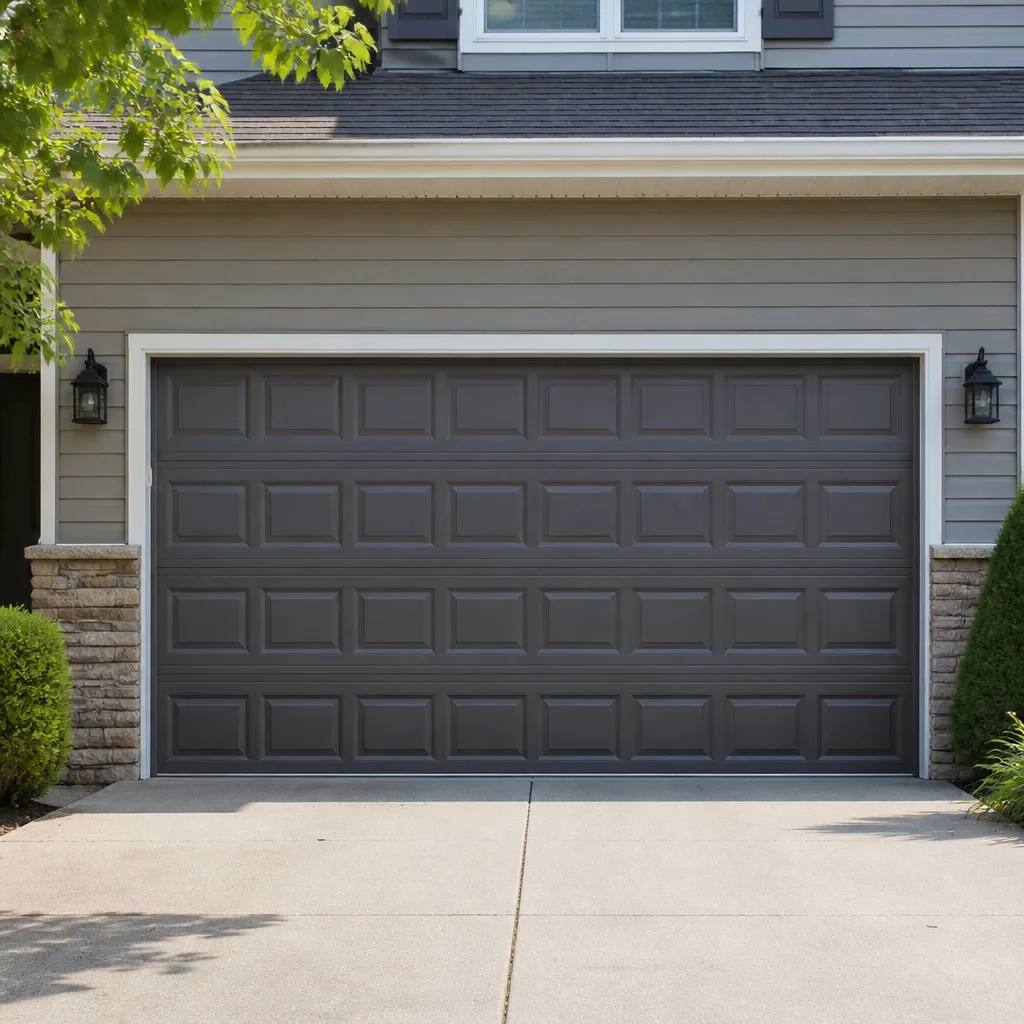 Raised-panel steel
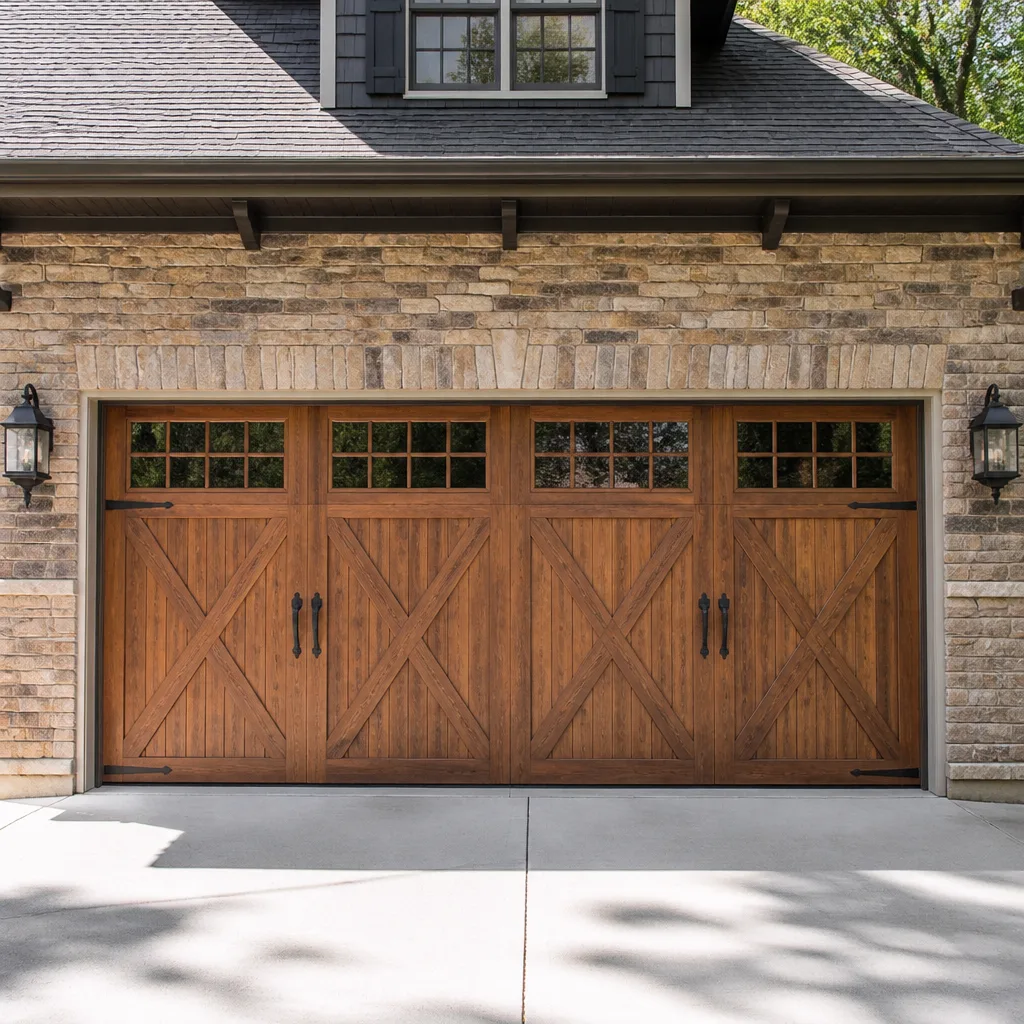 Carriage house
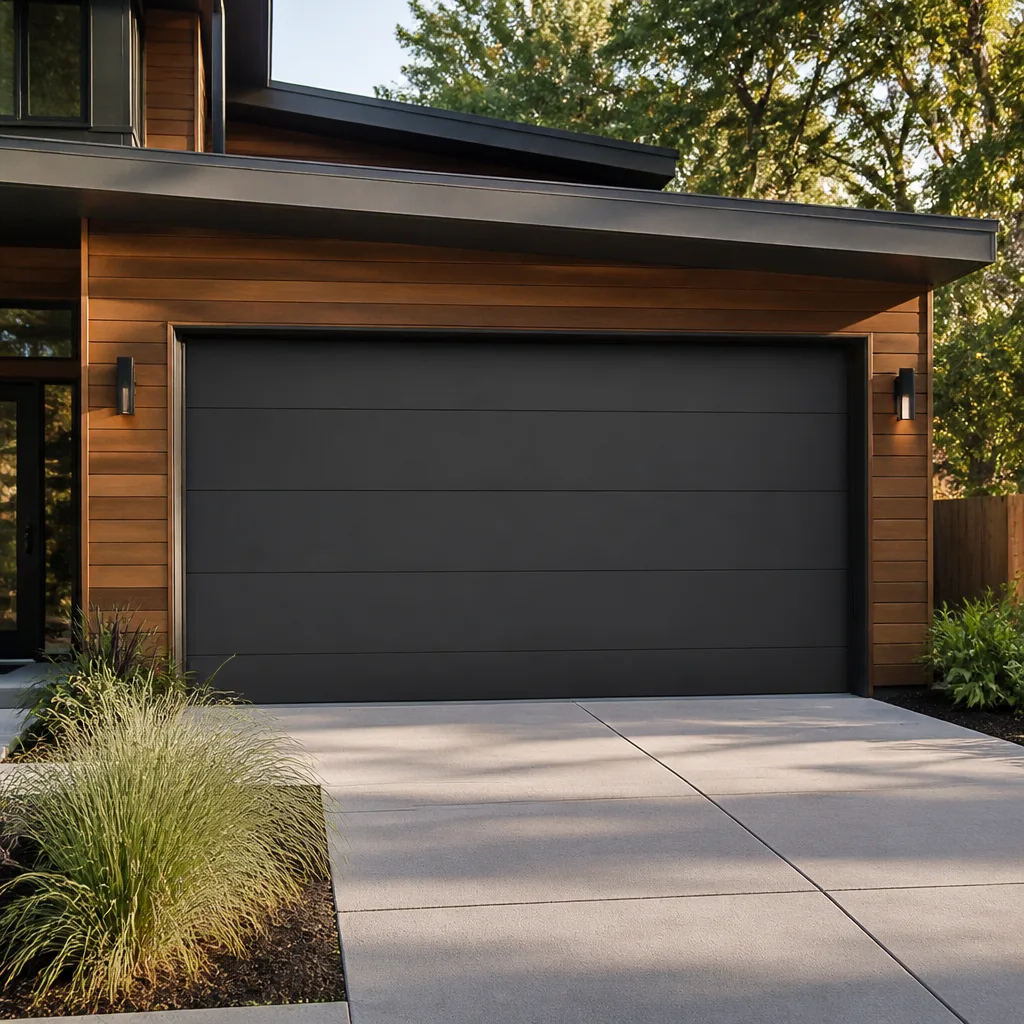 Modern flush
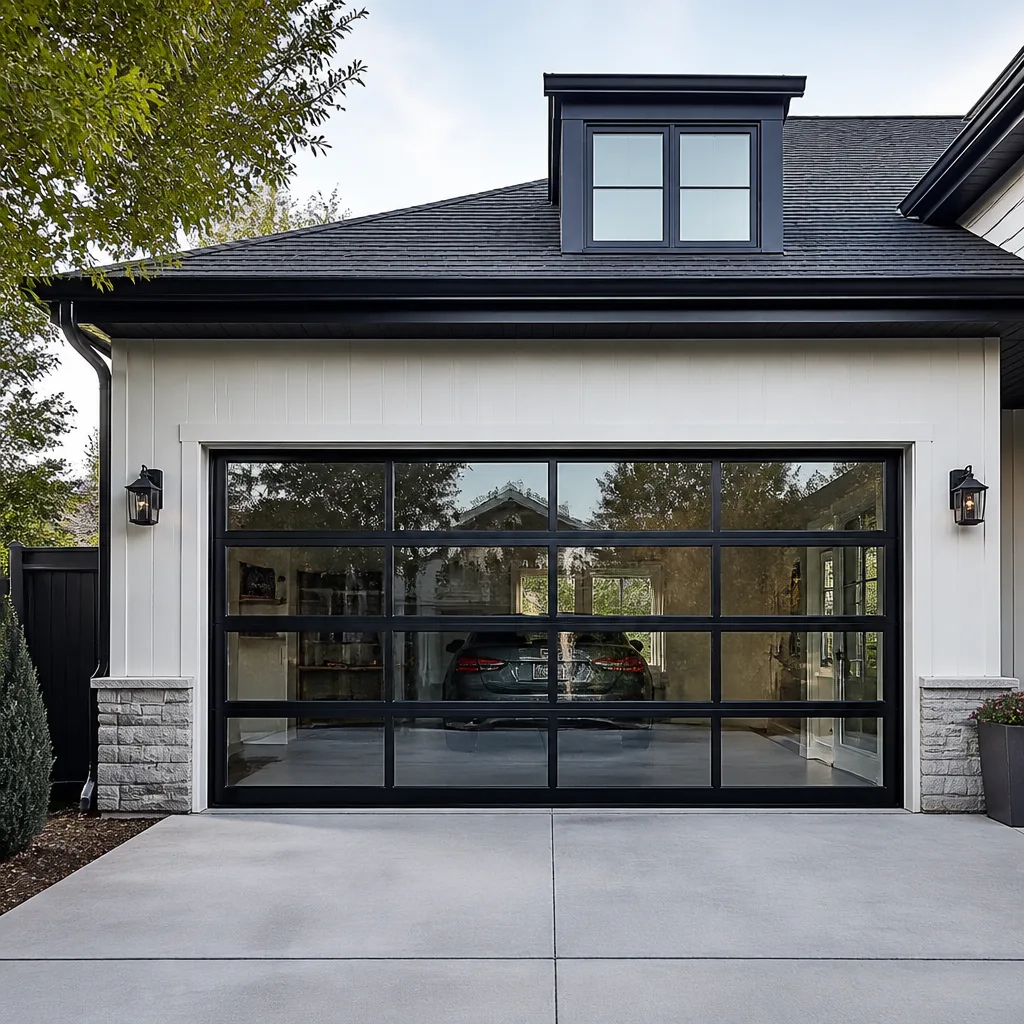 Full-view glass
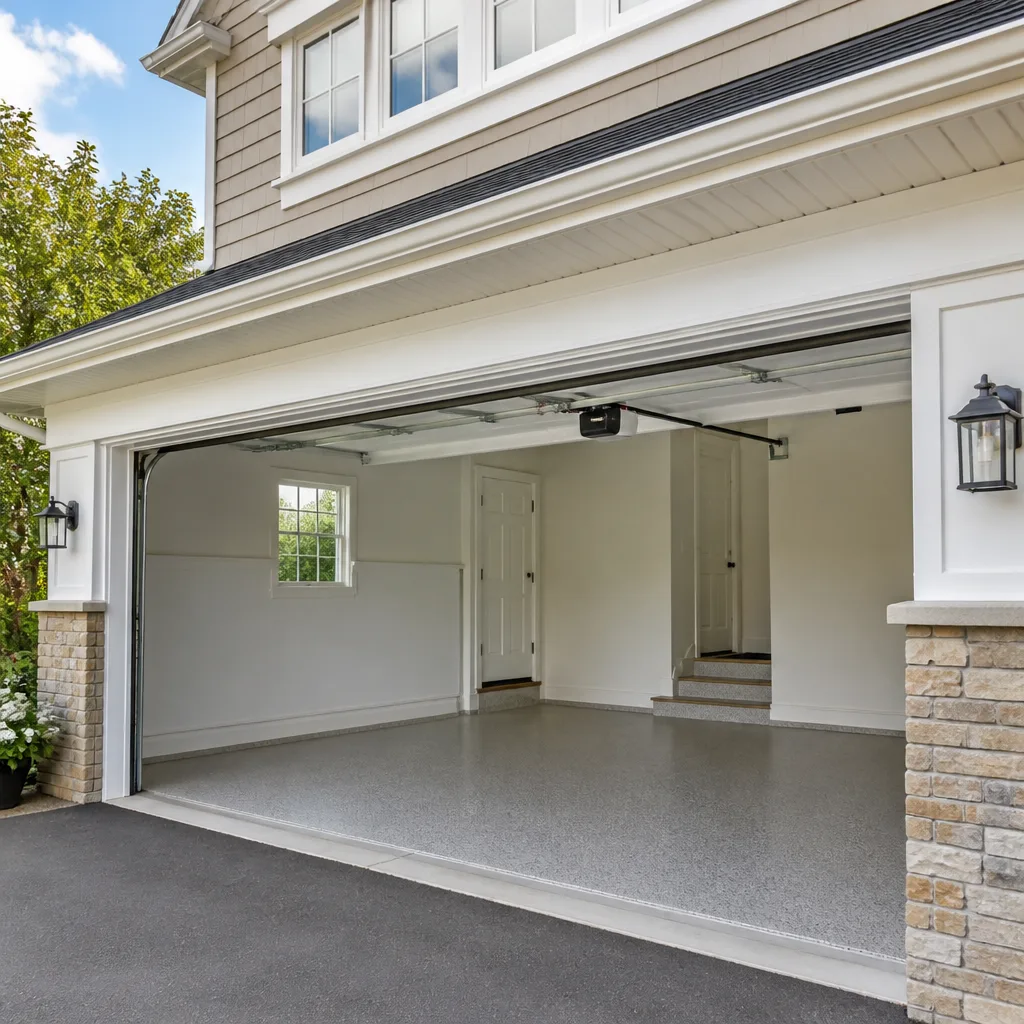 LiftMaster openers
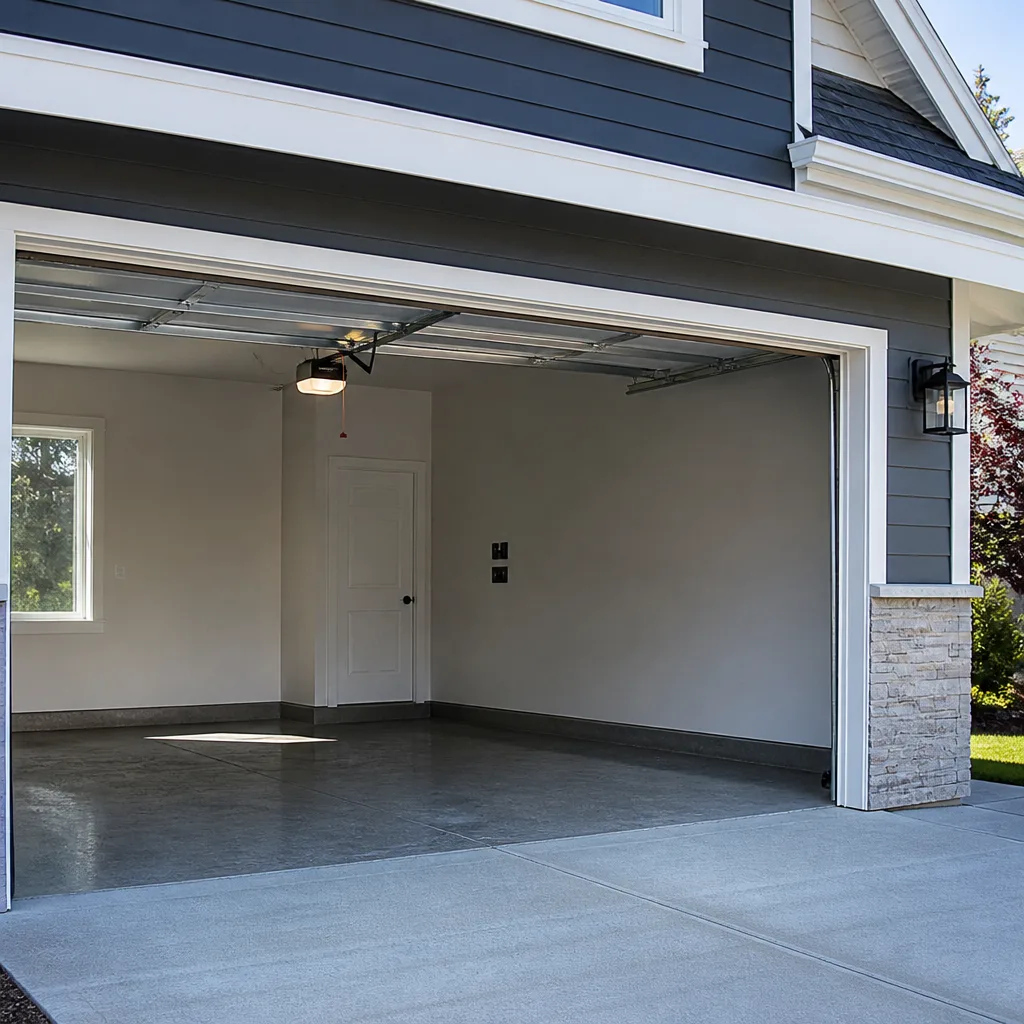 Chamberlain openers
Full 25-point door and opener safety check with every visit - springs, cables, rollers, tracks, and your LiftMaster or Chamberlain opener included
You get a price before we start. It does not change when the truck arrives.
Get your free estimateGarage Door Repair Maintenance Schedule: What to Do and When
The average garage door opens and closes around 1,500 times a year. Most homeowners service it once, after something breaks. That’s the backward way to do it. A single annual tune-up treats every part like it wears out at the same speed, and it doesn’t. Rollers go soft in a year or two. Springs last most of a decade. Weatherstripping in Portland takes a beating every wet season and needs attention twice a year. This guide lays out a task-by-task calendar built around how these parts actually age, so you check the right thing at the right time and catch failures before they strand your car or your door. You’ll get the intervals, the home tests, the lubrication rules, and a simple way to log it all.
Quick Answer
Check cables and hinges every six months, inspect springs and balance annually, service rollers every 12 to 18 months, replace weatherstripping twice a year ahead of and after Portland’s rainy season, and plan to replace springs proactively around the 7 to 9 year mark. Run a balance and force test at home whenever the door starts sounding or feeling different. Lubricate moving metal parts twice a year with a garage-door-specific lubricant, never WD-40 on the springs.
Styles & brands we work with
- Raised-panel steel
- Carriage house
- Modern flush
- Full-view glass
- LiftMaster openers
- Chamberlain openers
Table of Contents
- Why a Schedule Beats a Once-a-Year Tune-Up
- Component-Specific Service Intervals
- The Portland Seasonal Checklist
- The Balance Test and Force Test You Can Do at Home
- Lubrication: What to Use and Where
- How to Log Your Door’s History
- Common Mistakes to Avoid
- When to Call a Professional
Why a Schedule Beats a Once-a-Year Tune-Up
A garage door is not one machine. It’s a system of parts that live on completely different timelines. The torsion spring that lifts a typical two-car door is a wound coil of steel under enormous tension, and it works hard every single cycle, but a well-made spring holds for years. The nylon rollers riding in the track wear far faster, quietly flat-spotting and rumbling long before anything snaps. The bottom seal that keeps rain and pests out degrades on its own schedule, tied more to weather than to cycles.
When a homeowner books one annual tune-up, the technician spends that visit on whatever looks worst that day. That’s not a bad thing, but it means the parts on a slower or faster clock get checked on someone else’s calendar instead of their own. A real maintenance schedule assigns each job the interval it deserves.
In Portland, that mismatch shows up in specific ways. Doors here cycle hard during the wet months when people park inside to keep cars dry, and the long dry summer bakes the seals and finish that October rain will test. A door on a one-visit-a-year plan tends to get its seal looked at in the wrong season. Splitting the calendar into what you do before the rain and what you do after the dry spell keeps each component on its own honest rhythm.
We’ve worked on enough Shoreline Garage Door Service calls to see the pattern plainly: the doors that give homeowners the least grief are the ones where somebody was paying attention to rollers in spring and seals in fall, not waiting for a bang in the middle of a rainy week. The rest of this guide is that calendar, written out.
Component-Specific Service Intervals
Here’s the core of the schedule: each part of the door, paired with how often it actually needs a look. Treat these as the default rhythm and adjust if your door cycles a lot or sits mostly unused.
Rollers: every 12 to 18 months
Rollers are the wheels that carry the door along the track. Steel rollers last longer but run louder; nylon rollers are quieter but flat-spot and crack sooner, which is why 12 to 18 months is the honest window. A worn roller rumbles, drags, and puts extra strain on everything upstream. When rollers are the culprit, swapping them is one of the more satisfying fixes in this trade because the difference is immediate.
Springs: inspect annually, replace proactively at 7 to 9 years
Torsion and extension springs carry the weight of the door. They give warning in the form of stretching, gaps, or a door that suddenly feels heavy, but they can also fail without much notice. Inspect them once a year, and if the door is approaching the 7 to 9 year mark on its original springs, plan the replacement before it becomes an emergency. A broken spring leaves you with a door you shouldn’t force. This is not a part to diagnose or replace yourself; the tension stored in a wound spring can cause serious injury, so leave it to a trained technician.
Cables: visual check every six months
The lift cables run from the bottom corners up to the drum. Look for fraying, kinks, or slack. A cable that’s starting to fail is a safety concern, and like springs, it’s under tension. Check it with your eyes, not your hands, and call a professional if anything looks off.
Weatherstripping and bottom seal: twice a year in Portland
This is the component most tied to our weather. Portland rain finds every gap, and the bottom seal plus the side and top weatherstripping are what stand between your garage and a wet floor. Inspect both before the rainy season in October and again after the dry summer, when sun and heat have hardened the rubber. Replacing a tired seal is inexpensive and keeps water, leaves, and pests out.
Hinges and hardware: every six months
Hinges, brackets, and the bolts holding them loosen over time from all that vibration. A quick visual pass and light lubrication twice a year heads off the rattle that turns into a wobble.
Opener: follow the manufacturer’s cycle, check the safety reverse monthly
Whether it’s a LiftMaster, a Chamberlain, or an older Craftsman unit, the opener has its own wear items: the drive gear, the belt or chain, the travel limits. Test the safety reverse function monthly (more on that below), and have the opener serviced if it starts to strain, hesitate, or reverse on its own. Our garage door opener repair service handles the diagnostics when a unit starts misbehaving.
The Portland Seasonal Checklist
Portland’s climate gives you two natural checkpoints a year. Build your maintenance around them and the calendar takes care of itself. The goal is to get the door ready before the wet season arrives and to undo the wear the dry summer leaves behind.
Before the rainy season hits in October
- Inspect and replace the bottom seal and weatherstripping. This is the single most important pre-rain task. A cracked seal is an open door for water and cold air.
- Clear the tracks. Summer dust and debris collect in the track; a clean track keeps rollers rolling smoothly once the door is cycling more in wet weather.
- Lubricate hinges, rollers, and the opener’s moving parts. A dry mechanism runs harder and louder.
- Check the balance and force. With the door about to get heavy use, confirm it’s still lifting and lowering with the effort it should.
- Look at the exterior finish. Touch up any paint or sealant so moisture doesn’t get into wood or steel edges over the winter.
After the dry summer
- Re-check the seals. Heat and sun harden rubber and can pull seals away from the frame. What looked fine in spring may be brittle now.
- Inspect the finish for sun and heat stress. Dry summer weather stresses paints and finishes; a fresh coat protects the door through the coming wet months.
- Clear tracks again. Dry months mean dust and grit build-up that a wet season then turns into grime.
- Test the balance and safety reverse. A door that quietly went out of balance over summer is a door to fix now, not in a cold downpour.
- Check hinges and bolts for looseness. Seasonal temperature swings work fasteners loose over time.
Homeowners in neighborhoods like Sellwood, Laurelhurst, and St. Johns tend to have older homes with wood-framed openings and vintage-style doors, and those benefit most from the finish check. If your home is newer and the door is a Raynor or Clopay, the seal and balance checks matter most.
The Balance Test and Force Test You Can Do at Home
Two simple tests tell you more about a door’s health than any visual inspection. Do them when the door starts sounding different, feeling heavy, or moving unevenly, and repeat them at each seasonal checkpoint. They’re safe to do by hand. The point is to spot a problem, not to repair one.
The balance test
- Close the door fully and disengage the opener. Pull the release handle so the door moves by hand only.
- Raise the door about halfway. Lift it by the bottom edge, not by the panels.
- Let go and watch. A properly balanced door holds its position, roughly four feet off the ground. If it drops or rises on its own, the springs and the door’s weight are out of balance.
- Lower it by hand and re-engage the opener. Note what you saw.
A door that won’t hold position means the spring tension no longer matches the door’s weight. That’s a sign to have it checked, because adjusting the springs is a job for someone trained to work around that stored tension.
The force-resistance test (safety reverse)
- Close the door and re-engage the opener.
- Lay a small object in the door’s path (a roll of paper towels works) or place your hand lightly against the bottom edge as it closes.
- Watch what happens. The door should reverse immediately when it meets resistance. If it keeps pushing or only reacts after significant pressure, the opener’s force setting or safety system needs attention.
- Test the photo-eye safety sensors too. Wave an object across the sensor beam while the door closes; it should reverse.
These two tests are the most reliable early warnings you have. A door that fails either one is telling you something before it stops working entirely. If you’re unsure what you’re seeing, that’s a fair reason to call.
Lubrication: What to Use and Where
Lubrication is where well-meaning homeowners do the most accidental harm. The instinct to spray WD-40 on everything is understandable, and it’s exactly the wrong move for most of the door.
Use a garage-door-specific lubricant, a silicone-based spray or a dedicated white lithium grease made for overhead doors. Match the product to the part:
- Hinges, rollers, and the torsion bar bearings: a light coating of white lithium grease or a proper door lubricant.
- Rollers: a few drops on the roller bearings, not the wheels themselves.
- Tracks: leave them mostly alone. A dry track runs cleaner. Never grease the track itself; it collects grit and turns into a sticky paste.
- Springs: a proper door lubricant, sparingly. A common mistake is spraying WD-40 on the springs, which is a thin solvent and penetrating oil, not a lasting lubricant. It can strip the protective coating and accelerate corrosion, which is the last thing you want on a steel spring fighting Portland’s damp air.
Twice a year is the right rhythm: once ahead of the wet season, once after the dry summer. Don’t overdo it. More lubricant isn’t better; the wrong product in the wrong place is worse than none.
How to Log Your Door’s History
Most diagnostic time on a door goes to figuring out what’s already been done. A technician who can see the door’s history in one place skips the guesswork and gets to the actual problem faster. Building that log takes about ten minutes a year.
- Note the door make and model. If it’s a Clopay, Amarr, Raynor, or Wayne Dalton door, jot down the brand so anyone servicing it knows what they’re working with.
- Note the opener brand. LiftMaster, Chamberlain, Genie, and Craftsman all have their own quirks. Write down which one you have.
- Record each service visit and what was done. Date, part replaced or adjusted, and any notes on how the door was behaving.
- Log your own checks. Write down the date you ran a balance test or replaced a seal, and what you found.
- Keep the log somewhere accessible (a note on your phone, a sheet taped inside the garage, or clipped to the opener manual). Hand it over when you call.
This log pays off most when a door starts misbehaving and you can tell the technician “the springs were replaced a year ago but the rollers are original.” That one line can save a diagnostic step. Since we work across eight major brands, our garage door repair team can read that history against the specific system you own and get straight to the fix. Repair first, replacement only if the part truly won’t last.
Common Mistakes to Avoid
- Spraying WD-40 on springs and tracks. It’s the most common lubrication error we see. WD-40 is a solvent, not a lasting lubricant, and it can strip protective coatings and speed corrosion. Use a door-specific product on springs and leave the tracks dry.
- Waiting for a bang before servicing anything. A spring snapping or a cable letting go is the most expensive way to learn your door needed attention. The home tests catch imbalance and force problems long before failure.
- Forcing a door that won’t move. If the door feels heavy or won’t budge, stop. Prying or forcing it can damage panels and puts you near high-tension parts. Call a professional.
- Ignoring weatherstripping until water shows up. In Portland, a tired bottom seal lets rain and cold air in long before you notice a puddle. Check it twice a year, especially in October and after summer.
- Skipping the balance test. It’s the fastest, safest way to see if spring tension still matches the door’s weight, and it costs nothing to run.
- Replacing the whole door when one part is worn. A stuck or noisy door is usually a fixable part, not a reason to replace. A diagnostic-led approach finds the actual fault first.
- Not keeping a maintenance log. Without it, every visit starts from scratch and you may pay for diagnostic steps you’ve already paid for once.
When to Call a Professional
Some tasks belong on your calendar. Others belong to a technician. Call on a professional when the door won’t balance and the springs need adjustment, when a cable is frayed or slack, when a spring has broken, or when the opener doesn’t reverse on the force test and its settings don’t fix it. Also call if the door has come off its track, if panels are bent or the frame is pulling away, or if the door is 7 to 9 years old on original springs and you’d rather replace them on your schedule than on a rainy morning. These jobs involve stored energy and heavy parts, and a trained hand is the right call. Shoreline Garage Door Service is based in Portland and offers free estimates. Call (866) 942-7741 to book a visit. We work on LiftMaster, Chamberlain, Genie, Clopay, Amarr, Wayne Dalton, Craftsman, and Raynor systems, from repair and opener diagnostics through new door installation, so one call covers it.
See the difference
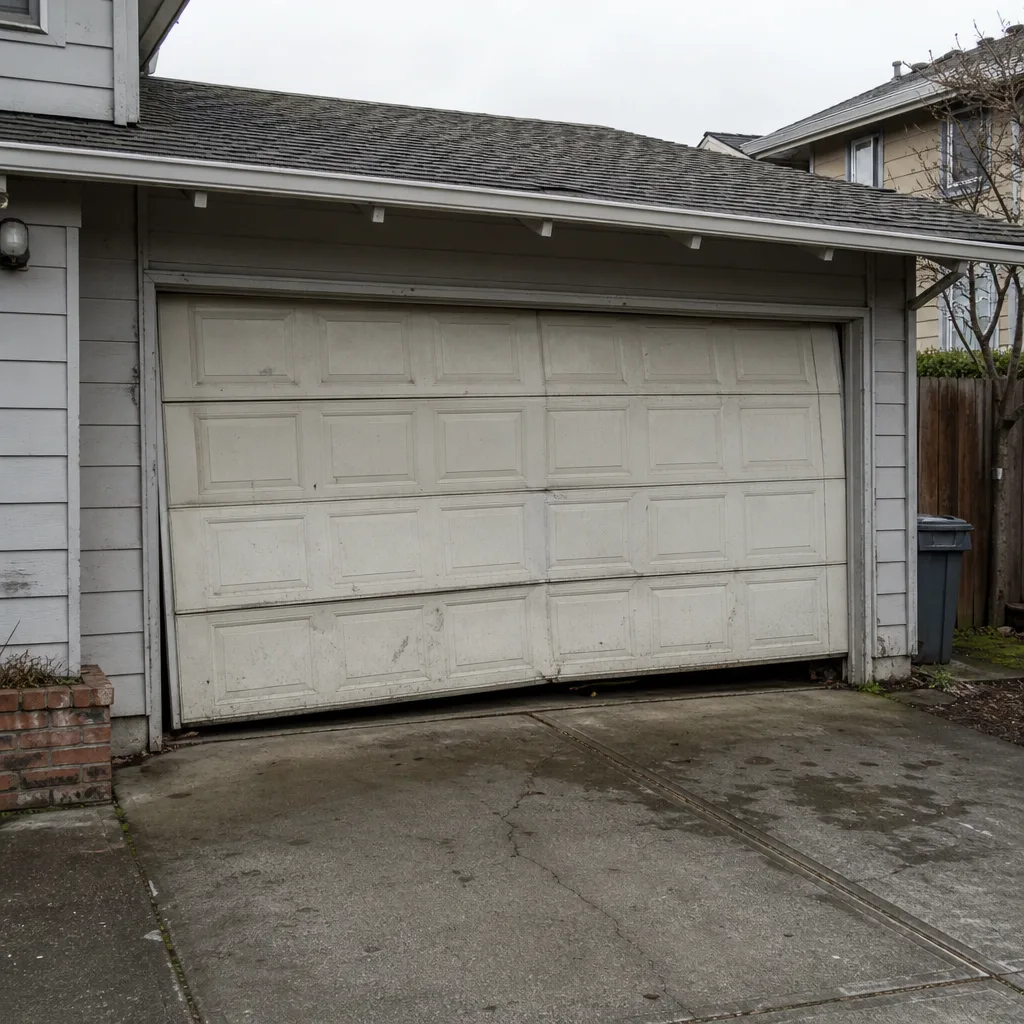 Before
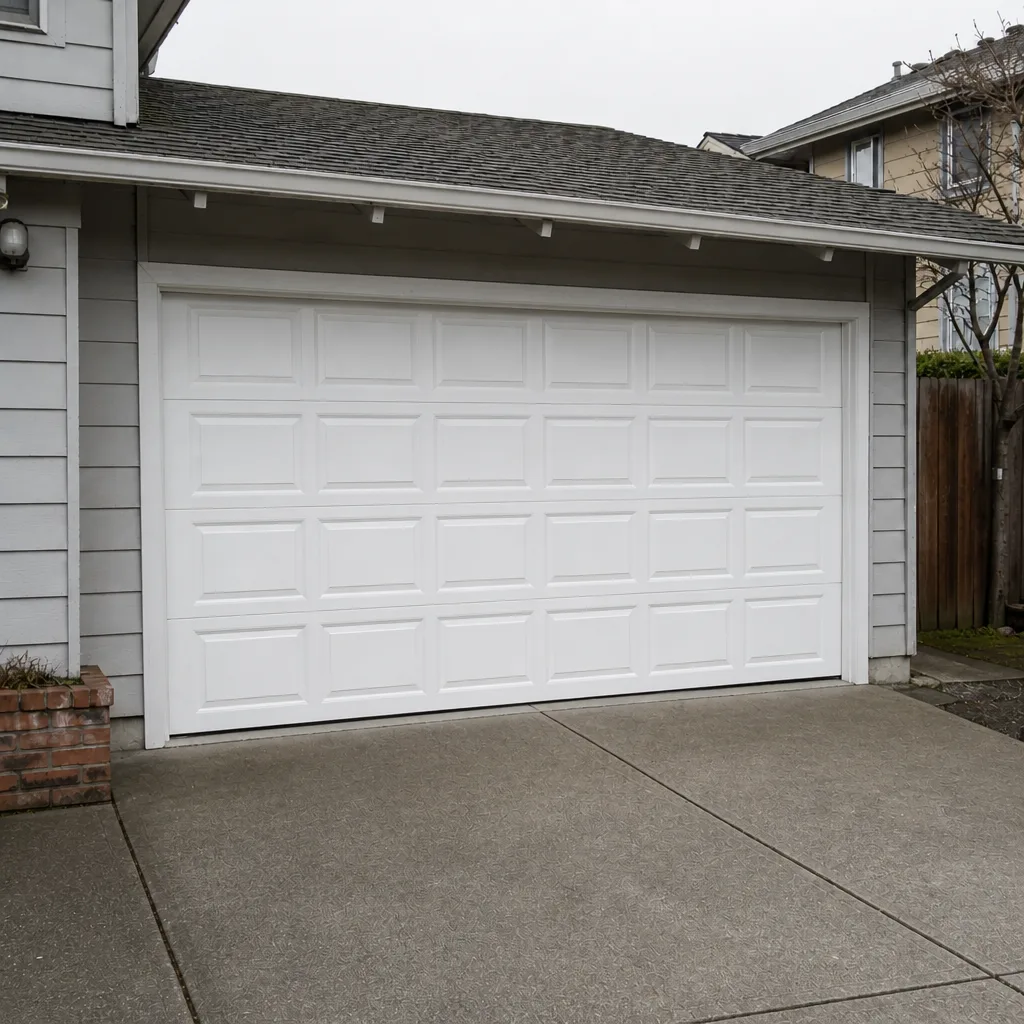 After
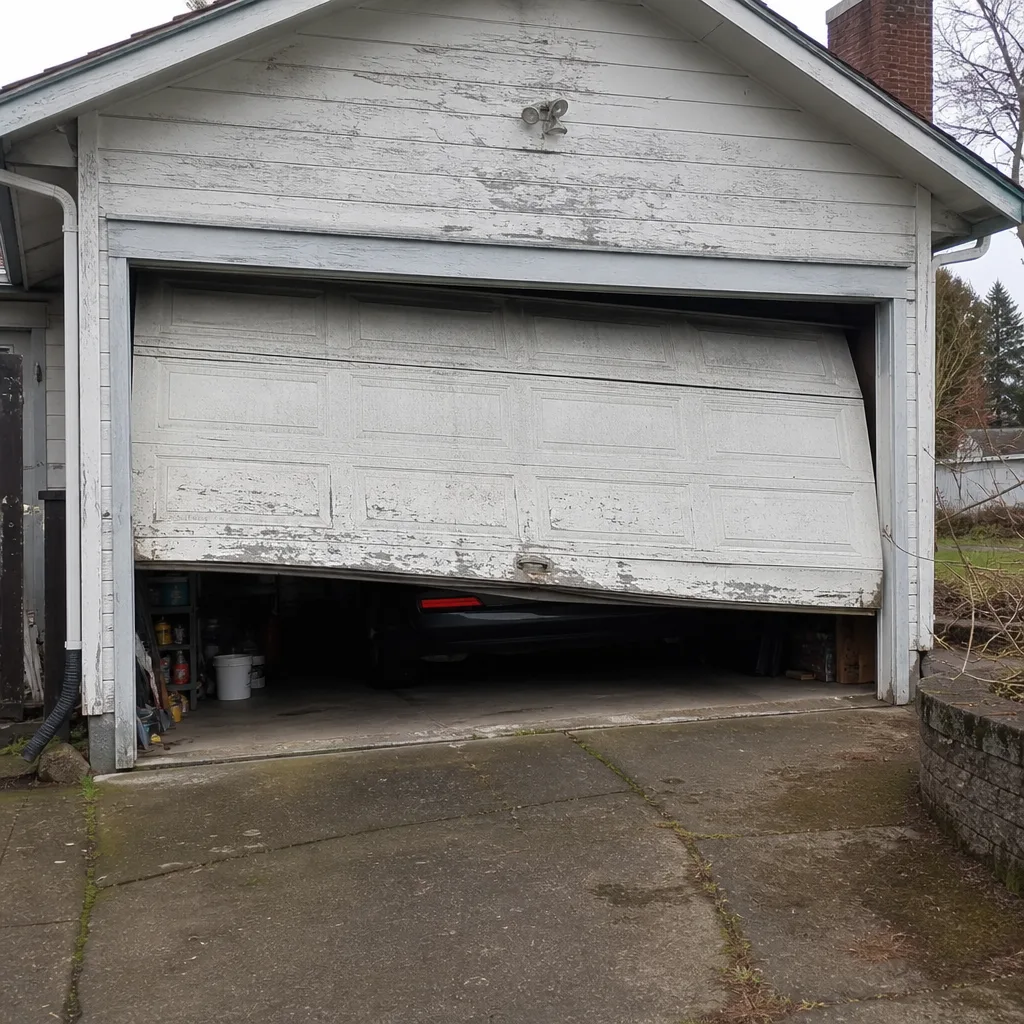 Before
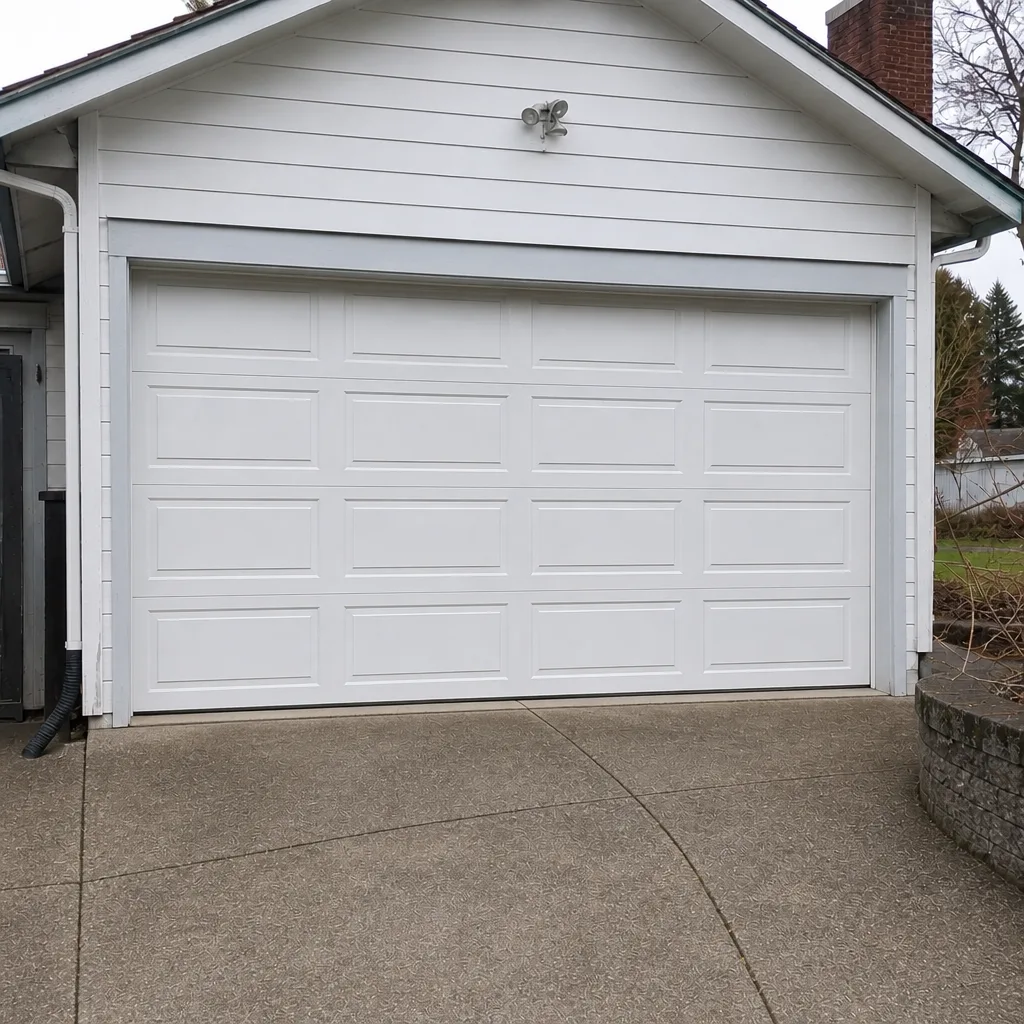 After
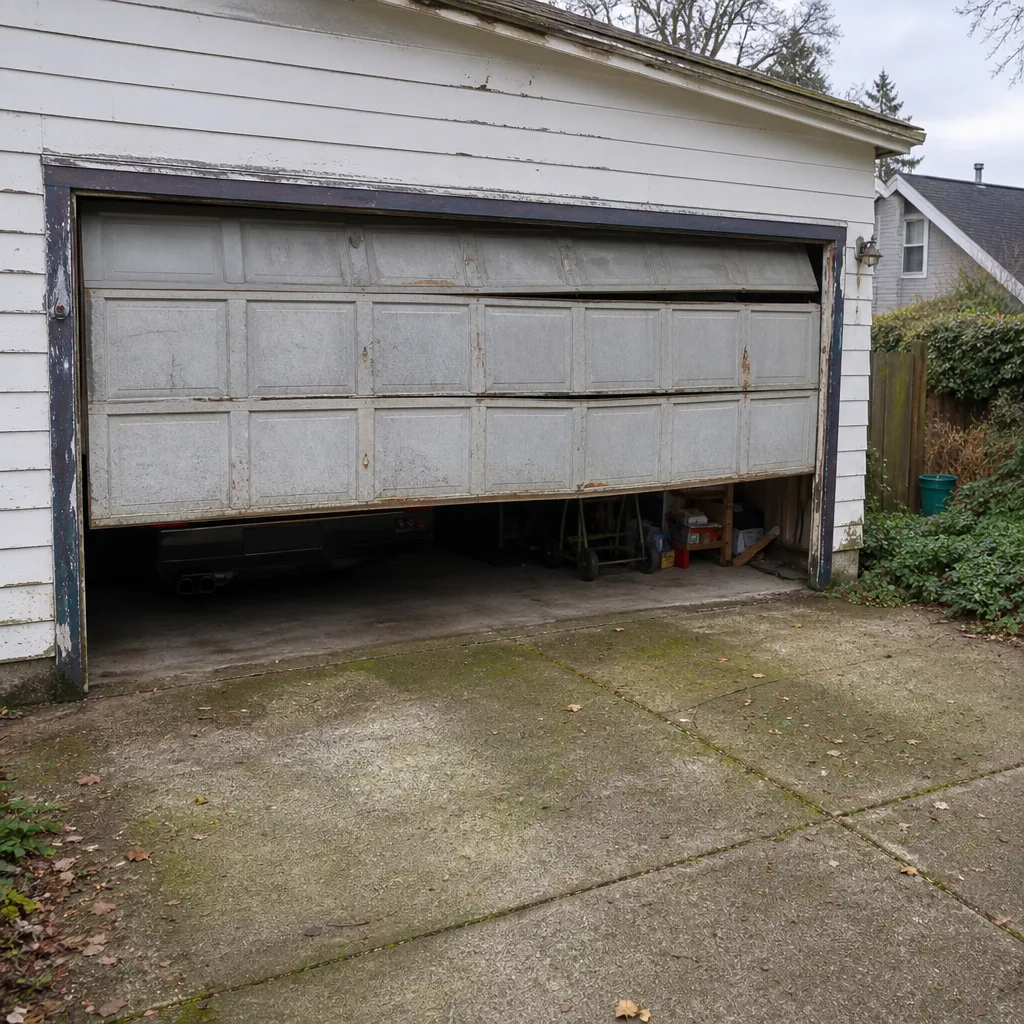 Before
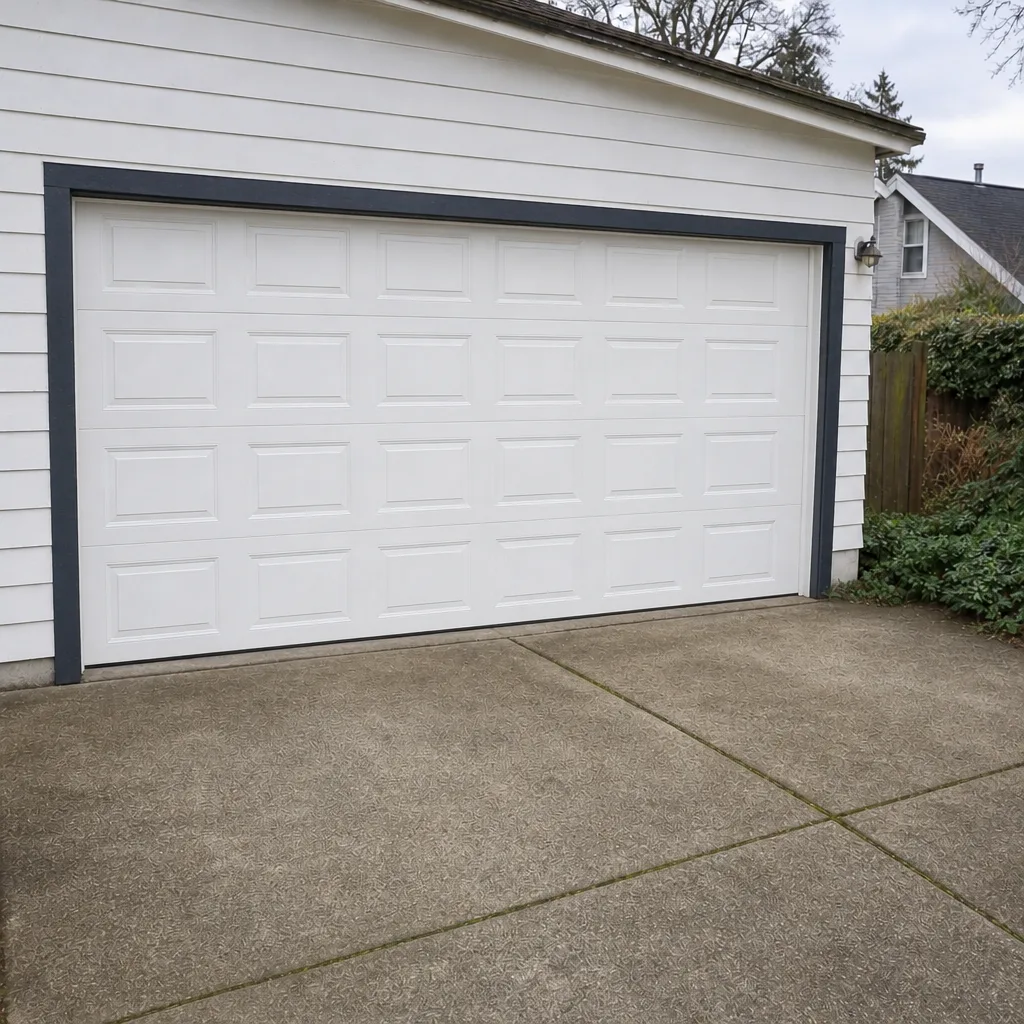 After
Frequently Asked Questions
Twice a year for the weatherstripping, tracks, and lubrication, plus an annual inspection of springs and a 12 to 18 month roller check. Break the twice-yearly work around Portland’s season: once before the October rains and once after the dry summer.
Plan on 7 to 9 years for a typical torsion spring, then replace proactively rather than waiting for it to break. Spring life depends on how often the door cycles, so a heavily used door may need replacing on the earlier end. Have them inspected annually and let a trained technician handle replacement; the stored tension makes them dangerous to work on yourself.
Not on the springs or tracks. WD-40 is a penetrating oil and solvent, not a lasting lubricant, and it can strip protective coating and accelerate corrosion on the springs. Use a garage-door-specific silicone spray or white lithium grease on springs, hinges, and roller bearings, and keep the tracks dry.
Disengage the opener, raise the door about halfway by hand, and let go. A balanced door holds that position. If it drops or rises on its own, the springs and the door’s weight are out of balance, and it’s time to have the springs checked.
Look for cracks, hardening, gaps at the corners, or a seal that’s pulled away from the frame. In Portland the most important time to check is just before the rainy season in October, and again after the dry summer has dried it out. Replacing it early keeps rain, cold air, and pests out.
Call for anything involving springs or cables, a door off its track, a broken spring, bent panels, or an opener that fails the safety reverse test. Those jobs carry real risk. For routine checks, lubrication, and weatherstripping, the homeowner can handle it safely.
The Bottom Line
Garage door maintenance works best as a calendar built around each part’s real wear cycle, not a single yearly visit. Check cables and hinges every six months, inspect springs and balance annually, service rollers every 12 to 18 months, and replace weatherstripping twice a year around Portland’s seasons. Run the balance and force tests whenever the door starts sounding different. Lubricate with the right product on the right part, keep a short log, and you’ll catch most failures before they strand you. When a job touches springs, cables, or a door off its track, call a trained professional.
Written by the team at Shoreline Garage Door Service, serving Portland since 2016.
Call Shoreline Garage Door Service for a Free Estimate
If your door has started to feel heavy, rattle, or struggle on the way up, don’t wait for it to quit. We handle repair, opener diagnostics, and new installation across the systems you’re likely to own, so a single call covers the whole job. We answer 24/7, and fast dispatch from 7am to 7pm, Sunday through Friday, means a technician can be on the way the same day. Call (866) 942-7741 for a free estimate on any repair or a free measure and written price on a new door. The estimate comes first, and the written price is the price.